
“Found $38K/yr leaking from 3 retainers”
“Used this in our last 4 renewal calls”
“Finally a number my partners believed”
“The 3-year number was the wake-up call”
How Much Is Scope Creep
Costing Your Agency?
Every retainer that runs over contracted hours is unbilled work — and most agencies never see the total. Plug in your retainer count, contracted vs. actual hours, and team rate. See the annual leak, the 3-year compound, and the equivalent FTE you’re giving away for free.
Scope Creep Cost Calculator
Quantify the unbilled hours leaking from your retainer book — monthly, annually, and over three years.
Start With Your Agency Type
What the retainer says you’ll deliver. The number on the SOW.
What your team really logs. Honest estimate — most agencies underestimate by 30%.
Not every retainer leaks. Industry average across digital agencies is 60–80%.
“Loaded” = salary + benefits + overhead, divided by realistic billable hours. We’ve done the math; pick the role doing most of the overflow work.
Annual Cost of Scope Creep
$60,480
8 of 12 retainer clients leaking ~8 hours each
Critical Creep · 40% Over ContractMonthly Leak
$5,040
Unbilled Hours / Month
67 hrs
Equivalent FTE Lost
0.5 FTE
Suggested Retainer Increase
+40%
Contracted vs. Actual Hours (Per Client, Per Month)
The red overhang is the unbilled work — multiplied across every leaking client, every month.
Contracted
20 hrs
Actual
28 hrs
Annual Leak (12 Months)
$60,480
If current conditions hold across the year.
3-Year Compound
$181,440
Untreated creep doesn’t shrink — it accumulates.
Stop the Leak. Catch It Monthly.
Scope Creep Survives Because It’s Invisible. Make It Visible.
Swydo pulls billable hours from your time tracker, layers them against retainer contracts, and sends email alerts the moment a client crosses budget (Slack alerts available via the beta Slack integration). Monthly, automatically, per client.
No credit card required · Cancel anytime · Unlimited users & clients
How It Works
The Math Behind the Leak
Scope creep is simple math hidden inside complex client relationships. The formula isn’t the hard part. The hard part is that no one’s looking.
The Formula
Total monthly leak Leaking clients = Total clients × Creep % Monthly leak = Per-client leak × Leaking clients
Projections Annual leak = Monthly leak × 12 3-year compound = Annual leak × 3 FTE lost = Annual unbilled hrs ÷ 1,700
Severity bands Minor → < 10% over contract Moderate → 10% to 30% Critical → > 30% over contract
Why 1,700 Hours for FTE Equivalence
A full-time employee theoretically has 2,080 working hours per year. Realistically, after holidays, sick days, training, and internal meetings, billable capacity is closer to 1,600–1,800. We use 1,700 as the midpoint — it gives you a true picture of how much agency capacity scope creep eats.
Severity Bands Reflect Negotiation Reality
Under 10% overage is usually friction — clarify in the next renewal. 10–30% means the SOW is structurally off and needs renegotiation now. Above 30% the relationship has changed shape entirely and the conversation is “what does the new retainer look like” — not “let’s tighten the existing one.”
Suggested Retainer Increase
The output isn’t a demand — it’s a math floor. If a client is consuming 28 hours against 20 contracted, the retainer needs to rise by 40% (or scope needs to shrink by 29%) to restore parity. Use it as the data anchor in your next renewal conversation.
The 3-Year Compound Is the Real Number
A $4,200 monthly leak is easy to dismiss. $151K over three years is impossible to ignore. Most untreated creep persists across renewals because no one ever surfaces the cumulative cost. The 3-year view is what gets the conversation onto the leadership agenda.
The Hidden Problem
Scope Creep Doesn’t Look Like a Crisis. That’s Why It Wins.
Nobody quits over scope creep. Nobody loses a client over it. It compounds quietly inside healthy-looking accounts for years before anyone notices the margin’s gone.
Industry average across digital agencies. The default state of an unmonitored retainer is over-delivery.
Agencies that track time properly find their actual hours are 25–40% above contracted.
By the time scope creep surfaces at an annual review, you’ve eaten ten months of leak.
Scope creep is structurally different from other agency problems. A bad client churns. A wrong hire underperforms visibly. A failed campaign shows up in the dashboard. Scope creep just compounds, in the background, on accounts that nobody flags because nothing’s wrong.
The account manager doesn’t surface it because “the client’s happy and we’re delivering.” The senior team doesn’t catch it because per-client time isn’t on the weekly dashboard. The founder finds out at year-end when the agency-wide P&L doesn’t match the per-client revenue pipeline — and by then there’s ten months of leak baked in.
The fix isn’t a stricter SOW. The fix is monthly visibility: a per-client view of contracted versus actual hours, refreshed automatically, so the conversation happens at month two — not month ten.
Next Steps
What to Do With Your Number
Whatever the calculator showed you, here’s the playbook for turning it into recovered margin — not just an unpleasant chart.
Audit One Week of Real Hours, Not Estimated Ones
The numbers you typed are probably conservative. Have every account manager track time precisely for five working days, per client, including emails and ad-hoc calls. The gap between estimated and actual usually doubles the leak number — and that’s the real one to take to your partners.
Rank Every Retainer by Overage Percentage
Not by revenue. Not by tenure. By overage. Your worst three retainers are usually doing 50%+ of the total leak. That’s where the renewal conversation goes first. Bonus: this ranking also tends to surface the clients you’ve been quietly tolerating because they’re “easy.”
Pick Your Lever — Price Up, Scope Down, or Walk
For each leaking client: raise the retainer to match real consumption, narrow the scope to fit the price, or part ways. The data turns this from a feel-based negotiation into a math one. “Your retainer covers 20 hours; you’ve consumed 32 hours/month for six months” is a different conversation than “we feel overstretched.”
Pick a Report Template to Make This Live
The mechanical step is making contracted-vs-actual visible monthly, automatically, per client — not at QBR. Browse the Swydo report templates library for ready-made starting points; the PPC and Cross-Channel templates already include a billable-hours widget.
Connect Toggl (or Your Time Tracker) Inside the Trial
The whole calculation runs on one thing: knowing actual hours per client. Swydo’s Toggl integration pipes that data into the dashboard automatically. Set up takes about 10 minutes; the leak shows up in your first scheduled report.
From Calculator to Dashboard
How Each Number Above Becomes a Monthly Alert
The calculator gives you the leak. Swydo gives you the early warning. Here’s exactly how each input lines up to a live data point in your dashboard.
- Monthly cadence, automatically. Scheduled reports auto-deliver to your team. Email alerts fire the moment a client crosses budget (Slack alerts available via the beta Slack integration). No one has to remember to run the report.
- Predictable cost as you scale. $69/mo flat for 10 data sources, then $4.50 each. No per-client tax, no per-user fee. The reporting line in your P&L stays predictable from 10 clients to 100.
- White-label everything. Show internal teams the margin view; show clients the deliverable view. One source of truth, two reports — both branded as yours.
- Free human-assisted migration. Already using AgencyAnalytics, DashThis, Whatagraph, or Looker Studio? Our team rebuilds your reports in 2–5 days. Free.
No credit card required · Cancel anytime · Free migration included
FAQ
Questions Agencies Actually Ask
What Counts as “Scope Creep” Versus Normal Client Service?
Scope creep is unbilled work outside what the retainer specifies. The test: if your SOW says “8 hours of paid social management per month” and the account manager is running 14 hours including ad-hoc creative tweaks, client meetings, and out-of-scope reporting — that’s 6 hours of creep, per client, per month.
Normal client service is the agreed deliverables completed within the agreed time budget. Anything beyond it is either a new line item to bill, a new scope to renegotiate, or a leak. There’s no fourth option.
Why Do 60–80% of Retainer Clients Leak?
Three structural reasons. First, account managers are incentivised to keep clients happy, not to enforce scope — so small overages get absorbed rather than flagged. Second, most agencies don’t track time per client granularly enough to spot creep until quarterly review. Third, retainers are usually priced based on the original scope, but the client’s needs evolve — and the retainer rarely evolves with them.
The 60–80% benchmark comes from time-tracking data published by Parakeeto, Productive, and Float across hundreds of digital agencies. It’s not a bug; it’s the default state of an unmonitored retainer.
What Does “Loaded Hourly Cost” Mean?
“Loaded” means the true cost of an hour of someone’s time — not just their hourly rate. It includes salary, employer taxes, benefits, software seats, and allocated overhead. The formula: annual salary × 1.3–1.5×, divided by realistic billable hours per year (~1,600 senior, ~1,800 junior — not the theoretical 2,080).
The dropdown’s tiers reflect roughly: Junior ($45K base ≈ $50/hr loaded), Mid ($65K ≈ $75/hr), Senior ($95K ≈ $110/hr), Lead/Strategist ($130K ≈ $150/hr), Director ($175K+ ≈ $200/hr). Pick whichever role does most of the overflow work — usually mid to senior specialists picking up the slack.
How Do I Bring This Up in a Renewal Without Damaging the Relationship?
Lead with data, not feeling. “Looking at the last six months, your account averaged 32 hours per month against the 20 hours in your retainer. That’s been compounding margin pressure on our side, and I want to flag it now rather than at year-end” lands differently than “we feel overstretched.”
Frame the options collaboratively: increase the retainer to match the work, narrow the scope back to the original budget, or pick the highest-impact items together. Most clients prefer transparency to a sudden price hike at renewal — and the ones who don’t usually weren’t sustainable accounts anyway.
Is Some Scope Creep Actually Good for the Relationship?
A little discretionary over-delivery can build goodwill — answering an extra email, taking a quick strategy call, jumping on an urgent request. The line is usually somewhere around 5%. Below that, it’s relationship investment. Above 10%, it’s systematic, unbilled, and you’re losing money to look generous.
The danger isn’t the goodwill hour; it’s that goodwill becomes precedent. Clients calibrate to what you actually deliver, not what’s in the SOW. After three months of 30% overage, they don’t see the over-delivery — they see the new normal.
Does This Apply to Project-Based Work or Just Retainers?
The calculator is built for retainers because that’s where creep compounds most invisibly. Project work has the same problem — projects routinely run 20–40% over their budgeted hours — but it surfaces at project close rather than slowly across years.
For project-based agencies, the equivalent tool is post-mortem hour tracking: budgeted vs actual on every project, ranked, with a target margin per project type. A Swydo trial handles both — retainer burn-down and project profitability live side by side.
What If My Team Doesn’t Track Time?
Then this calculator is your best estimate, not your real number — and your real number is almost certainly worse. Agencies without time tracking routinely underestimate scope creep by 40–60% because the team’s mental model of “how long things take” averages out the overruns.
Time tracking doesn’t have to be invasive. Toggl, Harvest, and Productive offer agency-friendly time tracking where account managers tag entries to clients in the background. Pair it with Swydo’s Toggl integration and the contracted-vs-actual report builds itself.
How Often Should I Run This Calculation?
Monthly for active retainers, quarterly for projects. The whole point of this calculator is that scope creep is invisible until you look at it — so the moment you stop looking, it goes back into hiding. Most agencies that fix creep do it by making the report unavoidable: it lands in a team inbox or Slack channel every Monday morning, or it’s the first slide of every weekly account review.
An annual review at QBR is too late. By then you’ve eaten 10–12 months of leak and the conversation gets dramatic. Monthly cadence keeps the conversation small.
More Free Tools
Other Calculators Worth a Minute of Your Time
Built on your data
Everything You’d Report On, Already Connected
Swydo pulls live client data from 30+ marketing platforms into automated, white-label reports and dashboards — the same engine behind every number in this calculator.
 Google Ads
 Google Analytics
 Facebook Ads
 Facebook Insights
 Microsoft Ads
 LinkedIn Ads
 Instagram Ads
 TikTok Ads
 X (Twitter) Ads
 YouTube
 Snapchat Ads
 Google Sheets
Start From a Ready-Made Report Template
Click any template to open a live example report you can clone in one click.
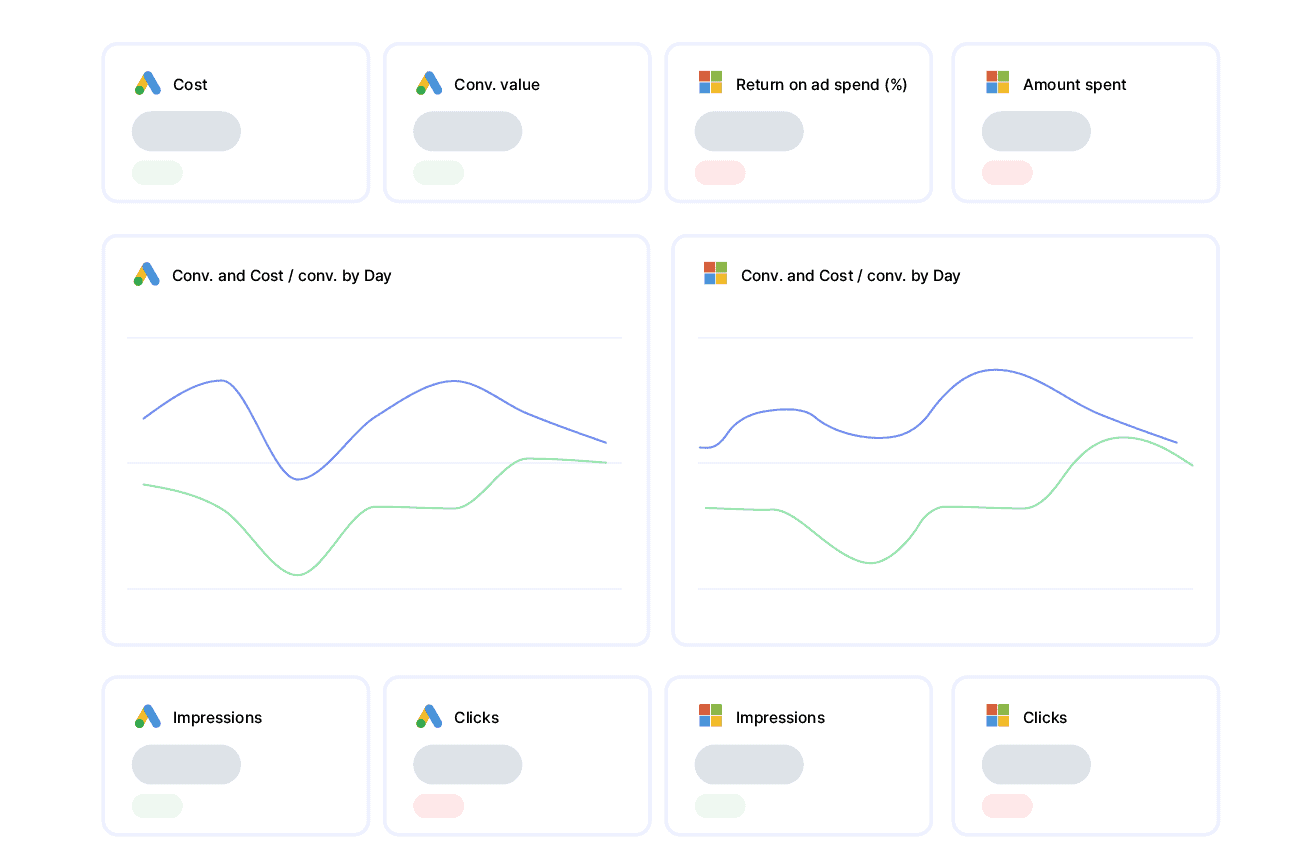
PPC Report
Google & Microsoft Ads spend, conversions, CPA and ROAS in one client-ready view.
View report template →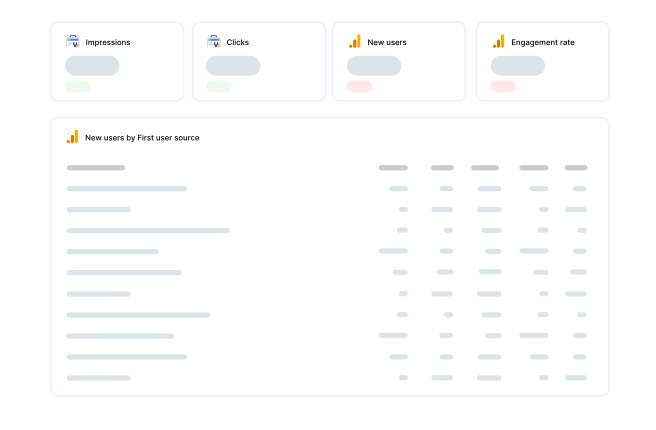
SEO Report
Organic traffic, keyword rankings and Search Console performance, automated each month.
View report template →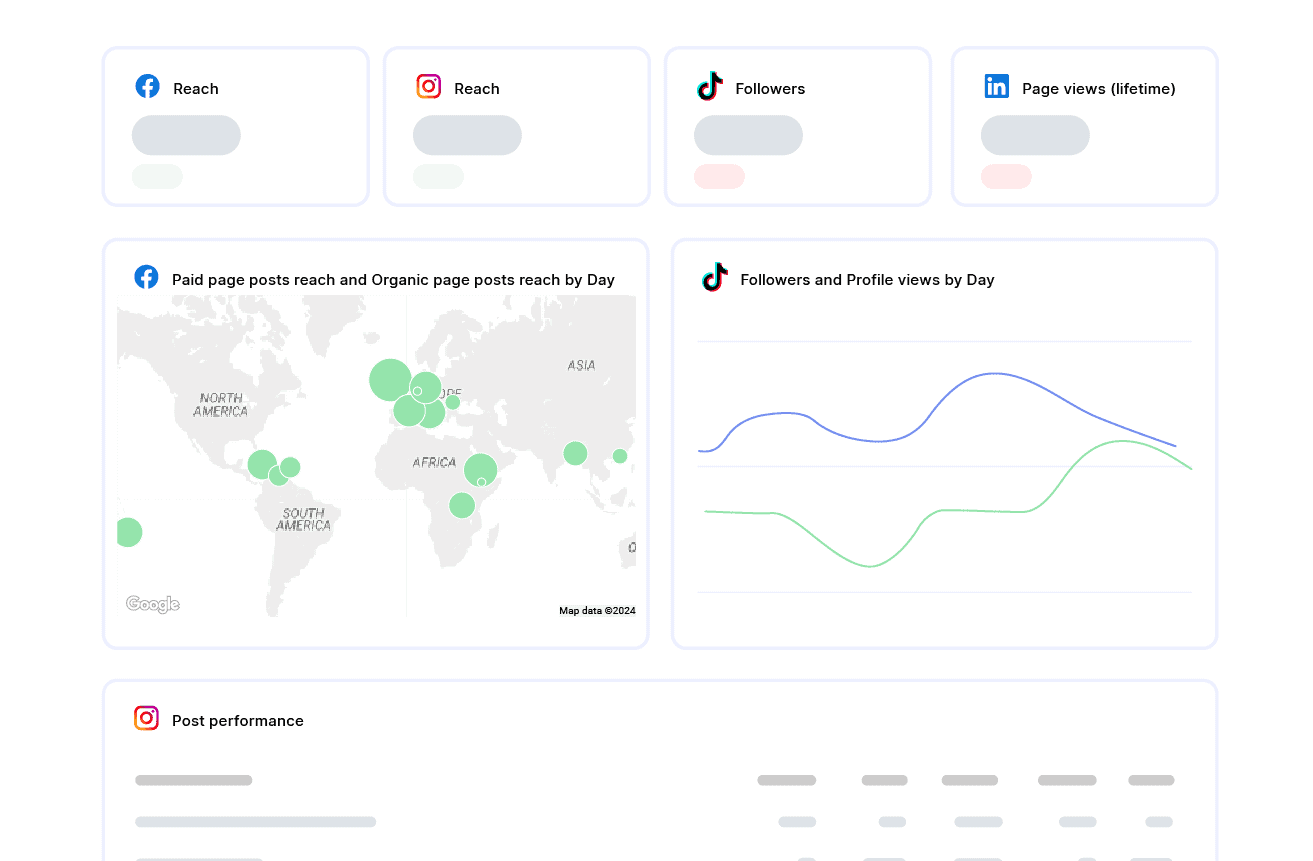
Social Media Report
Facebook, Instagram, LinkedIn and TikTok engagement and growth across every channel.
View report template →Client Testimonials
Discover Why Over 2,500 Agencies Trust Swydo
Swydo saves countless hours. An Excel report could easily take five or six hours. With Swydo, it takes 10 minutes, maybe 20.

The number one thing I love about Swydo is the customer support. I clicked the chat box and in less than 15 minutes I had a reply from Andrea.

What used to take days now takes minutes, cutting our reporting time by over 50%. An absolute game-changer!



Catch Scope Creep at Month Two, Not at Year-End.
You’ve seen what the leak costs. The next step is the same calculation, refreshed monthly, with email alerts the moment a client crosses budget (and Slack alerts via Swydo’s beta Slack integration). Swydo’s 14-day trial includes free human-assisted migration — our team connects your time tracker and rebuilds your reports.
No credit card · Cancel anytime · Free migration from any reporting tool