
Review management software is a platform that centralizes how a business generates, monitors, responds to, and reports on customer reviews — across Google, Yelp, Facebook, and 100+ other sites — from a single dashboard. For marketing agencies, the right platform is also the foundation of one of the stickiest recurring revenue services you can offer, because the results are visible, attributable, and directly connected to your client’s revenue.
Here’s why that matters in concrete terms. According to BrightLocal’s 2026 Local Consumer Review Survey, 96% of consumers read reviews before making a purchase decision, and 83% use Google specifically. Womply’s analysis of 200,000 small businesses found that businesses responding to at least 25% of their reviews earn 35% more revenue than average, and businesses rated 4.0–4.5 stars earn 28% more than the average business.
And Vendasta’s churn study of 130,000+ SMB accounts found that agencies whose clients use reputation management software see 57% higher client retention compared to agencies that don’t offer the service. That last stat alone should change how you think about your service offerings.
This guide covers every major platform with verified 2026 pricing, the operational practices that determine whether this service actually delivers for clients, and the compliance shifts that every agency needs to understand before running a review campaign.
Side-by-Side Comparison
This table is a quick reference — scan for starting price and agency fit, then read the platform sections above for context on what those numbers actually mean in practice. All prices are USD. The “Pricing Source” column tells you whether the price comes from the vendor’s own site or from third-party estimates.
| Platform | Agency Fit | White-Label | Starting Price | Source | Best For |
|---|---|---|---|---|---|
| Grade.us | ⭐⭐⭐⭐⭐ | ✅ Full | $110/mo | Vendor | Agency review mgmt |
| Vendasta | ⭐⭐⭐⭐⭐ | ✅ Full | $99/mo (platform) | Vendor | Full-service reseller |
| Birdeye | ⭐⭐⭐⭐ | ✅ Agency | ~$299/mo/loc† | 3rd party | Multi-loc enterprise |
| NiceJob | ⭐⭐⭐⭐ | ✅ Yes | $75/mo | Vendor | Home services |
| BrightLocal | ⭐⭐⭐⭐ | ✅ Reports | $39/mo (Track) | Vendor | Local SEO + reviews |
| LocalClarity | ⭐⭐⭐⭐ | ✅ Yes | $10/mo/loc | Vendor | Budget multi-loc |
| Widewail | ⭐⭐⭐⭐ | ✅ Yes | $500/mo/loc | Vendor | Human responses |
| Swell | ⭐⭐⭐⭐ | ✅ Yes | Demo required | Vendor | Healthcare (HIPAA) |
| Podium | ⭐⭐⭐ | ⚠️ Limited | ~$399/mo | 3rd party | Local biz SMS |
| Yext | ⭐⭐⭐ | ✅ Partner | $199/yr (~$17/mo) | Vendor | Listings + reviews |
| ReviewTrackers | ⭐⭐⭐ | ✅ Higher | Demo required | Vendor | Enterprise monitoring |
| Reputation.com | ⭐⭐⭐ | ✅ Enterprise | $80/loc/mo | Vendor | Large franchises |
| Chatmeter | ⭐⭐⭐ | ✅ Enterprise | Demo required | 3rd party | 50+ loc networks |
| Trustpilot | ⭐⭐⭐ | ⚠️ Minimal | $319/mo (Plus) | Vendor | E-commerce / B2B |
What’s Changed Since You Last Evaluated These Platforms
Before the platform breakdown, four quick shifts worth knowing about — especially if you haven’t re-evaluated your stack recently.
The FTC’s Final Rule on fake reviews is now being enforced. Fines are $53,088 per violation — per review, not per campaign. On December 22, 2025, the FTC sent its first warning letters to 10 companies. Review gating — only sending happy customers to Google — is explicitly banned. If your platform still offers it as a feature, that’s a red flag.
Google removed over 240 million policy-violating reviews in 2024 and now shows a public “Suspected fake reviews were recently removed” banner on flagged profiles. Consumer trust in reviews has dropped to 42%, down from 79% in 2020, and 74% of consumers only care about reviews from the last three months.
Meanwhile, 45% of consumers now use AI tools like ChatGPT for local recommendations, and reviews account for roughly 20% of local pack ranking factors per Whitespark’s 2026 Local Search Ranking Factors. The platforms that handle all of this well — and the ones that don’t — are covered below.
What to Evaluate When Choosing a Platform
Most comparisons of review management platforms focus on feature checklists. Features matter, but the more useful lens for agencies is whether the platform fits the workflow you need to run efficiently across multiple clients, and whether the economics let you build a profitable recurring service rather than just managing a cost. Here are the dimensions that actually determine value in practice.
Review Generation: The Feature That Makes Results Visible to Clients
Review generation is the capability clients notice directly, because the impact shows up in metrics anyone can see without logging into a dashboard. According to BrightLocal’s 2026 survey, 83% of consumers who are asked to leave a review do so. That means the main bottleneck isn’t willingness — it’s whether the system delivers that ask consistently, to every eligible customer, through the right channel at the right moment.
SMS and email perform differently enough that using both is worth the setup. GatherUp’s November 2024 data breaks it down:
| Channel | Reviews per 100 Requests | Why It Works |
|---|---|---|
| SMS only | ~20 | Seen faster, higher open rate |
| Email only | ~15 | More detail, lower urgency |
| SMS + Email sequence | ~26 | 73% more than email alone |
That combined approach — SMS first, email follow-up 48 hours later if no action — is the highest-performing tactic available through most platforms. If your current platform only supports one channel, you’re leaving reviews on the table.
White-Label and Reseller Capabilities
For agencies selling review management as a service, white-labeling determines whether clients see your brand or the software vendor’s brand throughout the entire experience. Before committing to any platform, ask these four questions:
- Login experience: Can clients log in under your agency’s domain, or do they see the vendor’s branding on the login page?
- Outbound communications: Do review requests come from your domain, or does the vendor’s name show up in the sender field?
- Reports: Are reports branded with your logo and free of any vendor watermarks or “Powered by” footers?
- Hidden fees: Is there an extra annual fee for white-labeling, or is it included in the base plan?
A vendor that can’t give clean answers to all four is telling you something about how they view the agency relationship.
The Pricing Structure, and Where Surprises Hide
Per-location pricing catches a lot of agencies off guard. A platform at $50/location/month sounds reasonable until your client has 12 locations and you’re paying $600/month for one account. Run the math on your actual client mix before committing.
And always get the month-to-month rate. Some platforms advertise a monthly price that only applies on annual prepayment, with the true monthly rate running 25–30% higher. Others require 12-month contracts with onboarding fees that can add $500–$1,500 to your first-month cost. Those details don’t always show up on the pricing page.
The Best Review Management Platforms in 2026
All pricing below is verified as of April 2026, in USD, on monthly billing unless stated. Where pricing isn’t publicly disclosed by the vendor, that’s noted and any third-party estimates are attributed as such — not presented as confirmed figures.
Grade.us — Built Specifically for Agencies
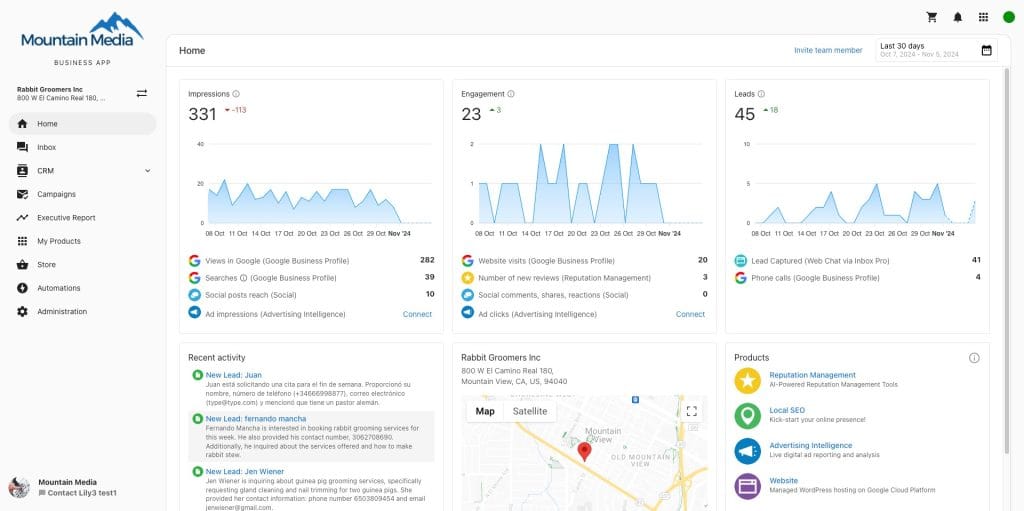
Grade.us is designed for agencies and resellers from the ground up, and that shows in how deeply the white-labeling goes. Basic white-labeling is included on every tier — custom domain for review funnels, outbound emails from your domain, branded reports with no Grade.us trace anywhere a client sees. Premium dashboard branding, where your logo appears inside the dashboard itself, costs $440/year and is available from the Agency tier up (complimentary at Partner).
| Solo | Professional | Agency | Partner |
|---|---|---|---|
| $110/mo — 1 seat | $180/mo — 3 seats | $400/mo — 10 seats | $2,500/mo — 100 seats |
If your agency focuses on review management as a core service and you want the deepest white-label setup without paying for a broader platform you don’t need, Grade.us is the most direct answer. The per-seat pricing also means your costs scale predictably as you add clients — no per-location surprises.
Vendasta — For Agencies That Want to Resell Multiple Services
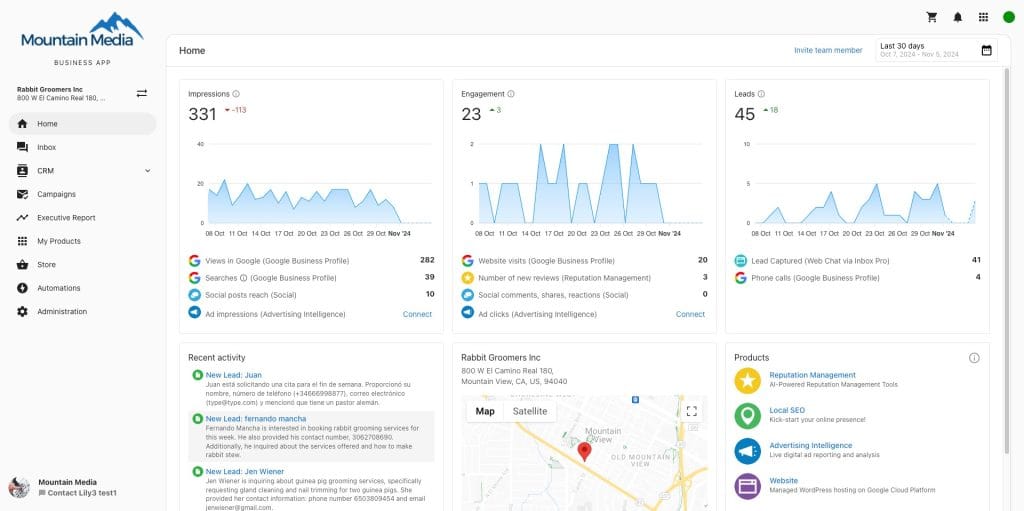
Vendasta is for agencies that want to resell multiple digital marketing services — reviews, listings, social, SEO, advertising — all under their own brand. The platform subscription covers access to the marketplace; the Reputation AI product within Vendasta costs roughly $15–$35/location/month wholesale, and you set your own client-facing price above that.
| Starter | Professional | Premium | |
|---|---|---|---|
| Price | $99/mo | ~$499/mo | ~$999/mo |
| Contract | No contract | 12-month required | 12-month required |
| Onboarding | None | ~$500 one-time | ~$1,500 one-time |
| White-label | Basic logo branding | Full: custom URL, dashboard, SSO | Full + sub-brands, dedicated fulfillment |
One thing worth noting: Vendasta’s own churn study found that clients using reputation management had 57% higher retention, clients responding to half or more of their reviews hit a 66% retention rate, and clients responding to at least one review showed a 124% lift in retention versus those who responded to none.
This is Vendasta’s own data, not independent research, but the sample size of 130,000+ SMB accounts is large enough to take seriously — and it’s useful ammunition when you’re pitching the service to clients.
Birdeye — Best for Multi-Location and Enterprise Clients
Important: Birdeye does not publicly disclose pricing on its website. All figures below are widely reported by third-party sources (Capterra, SocialPilot, Reviewflowz) and should be treated as estimates, not vendor-confirmed numbers. You’ll need a demo for an exact quote.
Third-party sources consistently report three tiers, all priced per location with an annual commitment required:
- Starter: ~$299/month per location on annual billing (roughly $389 on monthly). This is the entry point and includes core review monitoring and generation.
- Growth: ~$349/month per location. Adds more advanced features like webchat and referral tools.
- Dominate: ~$449/month per location. Full suite including social, listings, and competitive benchmarking.
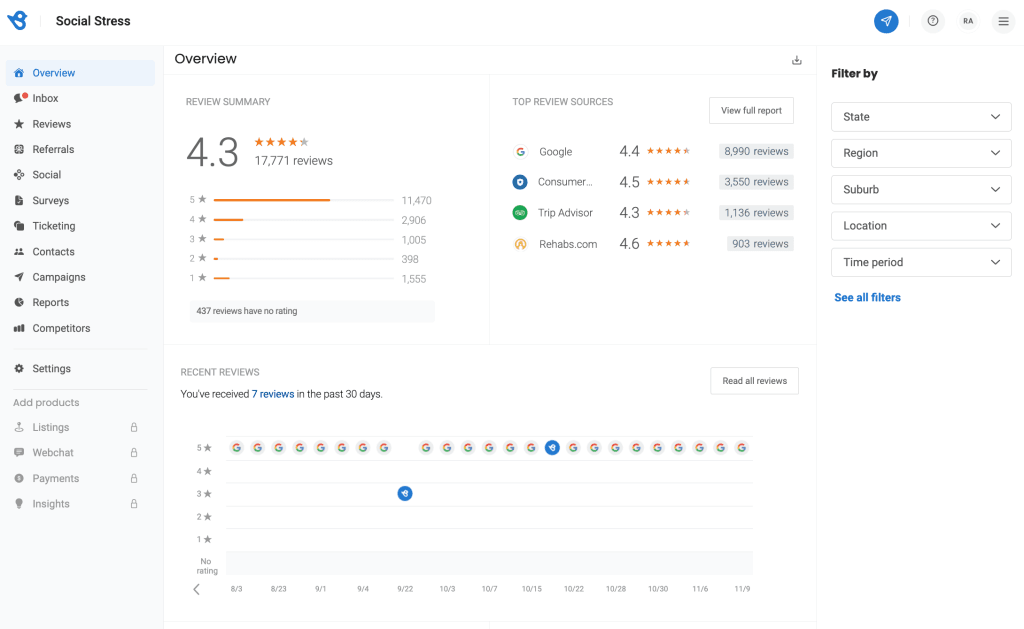
Birdeye monitors 200+ review sources and offers white-labeling on agency and enterprise plans. This is the right platform if your clients include multi-location businesses in healthcare, dental, home services, or hospitality. For single-location clients, the per-location cost is hard to justify against platforms like Grade.us or NiceJob that start at $75–$110/month with no per-location multiplier.
NiceJob — Autopilot Reviews for Home Service Businesses
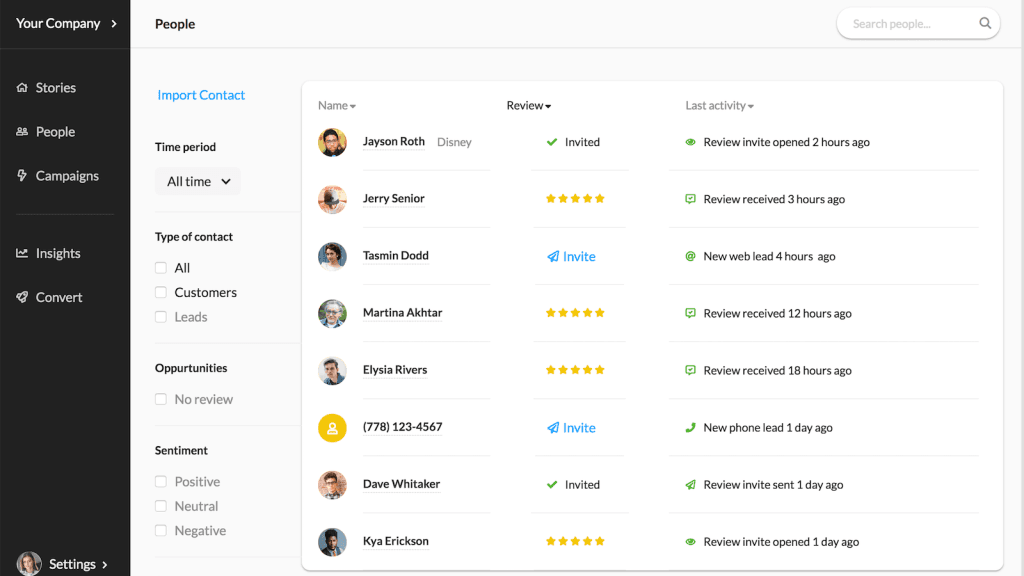
NiceJob’s Reviews plan is $75/month for one location. The Convert plan, which adds a sales-focused website and SEO layer, is $174/month. But the real selling point isn’t the price — it’s the automation. NiceJob triggers review requests based on job completion events from CRM and field service tools like ServiceTitan, Jobber, and Housecall Pro.
Why does that matter? A review request that hits a homeowner within 24 hours of a completed job, while they’re still happy and the experience is fresh, converts at a significantly higher rate than a weekly batch email sent on Tuesday morning. If your agency serves plumbers, HVAC companies, roofers, or landscapers, this automation is difficult to replicate on a general-purpose review platform.
BrightLocal — The Local SEO Combo Option
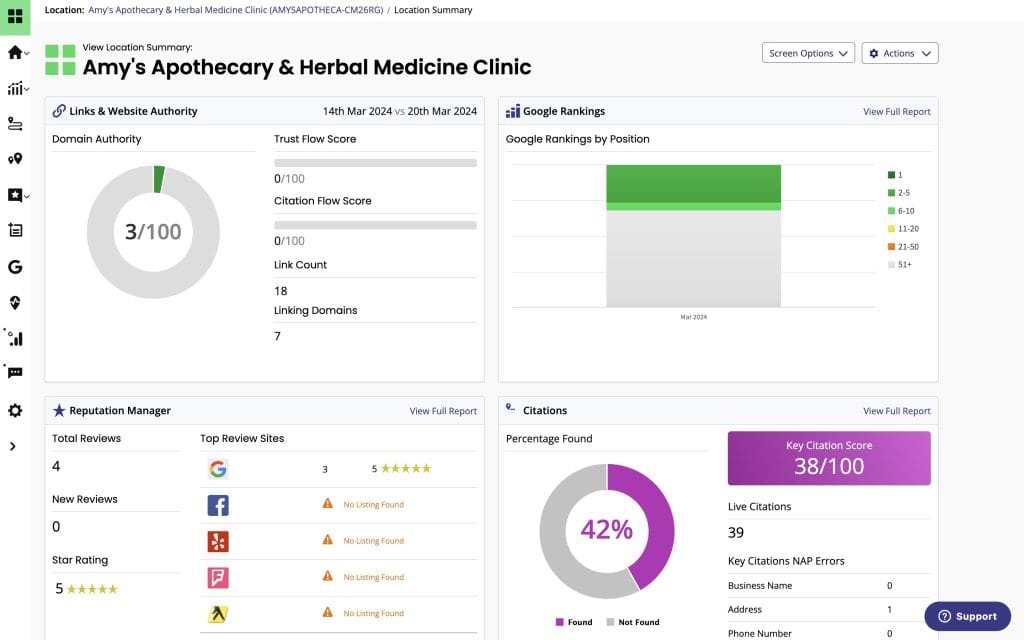
BrightLocal is a local SEO platform with solid review management built in. If you’re already using it for citations and rank tracking, adding review management is a natural consolidation that avoids another vendor relationship.
| Track | Manage | Grow | |
|---|---|---|---|
| Price | $39/mo | $49/mo | $59/mo |
| Includes | Rank tracking, citations | + Listing management | + Review management |
Review management lives on the Grow plan. BrightLocal is stronger for monitoring and reporting than for aggressively driving new review volume, but for agencies serving small businesses that want review management alongside local SEO work, it’s the best value in the category.
LocalClarity — Budget-Friendly Multi-Location Management
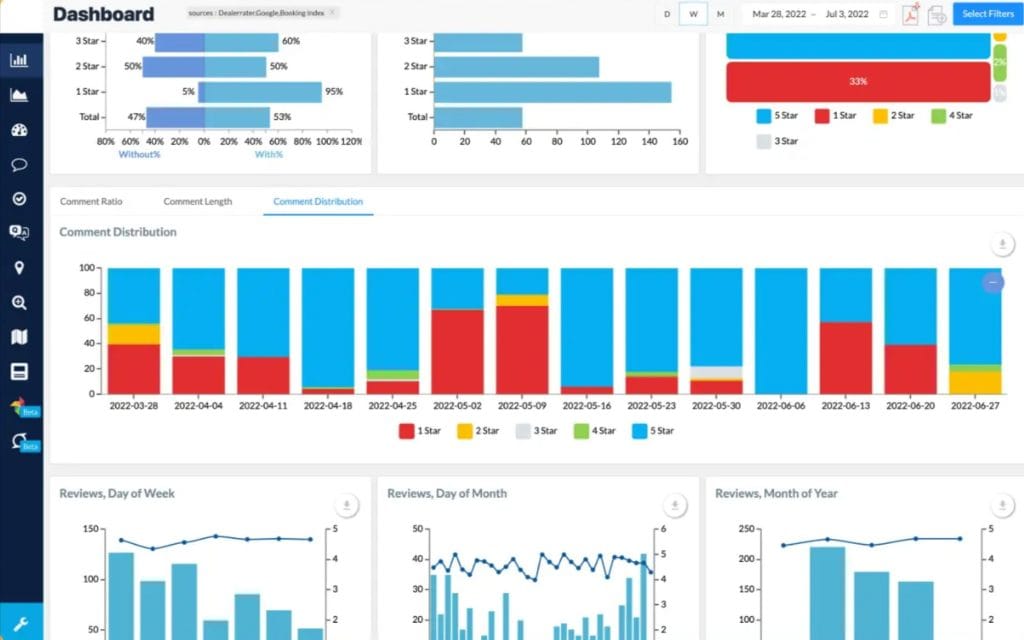
LocalClarity charges $10/month per location on monthly billing, or $8/month per location on annual billing. The Professional tier adds competitor tracking and advanced analytics for $15/month per location ($12 annual). No minimum location count, which is rare.
Here’s where this platform earns its spot: if you manage a client with 30 locations, that’s $300/month. At that scale, LocalClarity keeps the math workable. On Birdeye at ~$299/location, that same client would cost roughly $9,000/month. On Widewail at $500/location, you’re looking at $15,000/month. The trade-off is a less polished UI and fewer automation features — but for high location counts on tight margins, nothing else comes close.
Widewail — Human-Written Review Responses as a Service
Widewail is the only platform where real people write every review response. That’s not an AI draft with human editing — it’s actual humans reading each review and crafting a unique reply. The pricing reflects it:
- Core — $500/month per location: Software platform, automated review requests, listings management, surveys, SMS video testimonials, and analytics. You write the responses.
- Pro — $750/month per location: Everything in Core, plus Widewail’s team writes all your review responses and manages social media posts. This is the managed service.
The platform is heavily automotive-focused with DMS integrations but serves other industries.
The price point means Widewail only makes economic sense when clients value human-crafted responses highly enough to pay a premium. For automotive dealerships where review responses reflect on the sales experience, and medical practices where a generic bot reply feels dismissive, the investment often pays for itself. For cost-sensitive small businesses, this isn’t the right fit.
Swell — Healthcare-Only and HIPAA Compliant
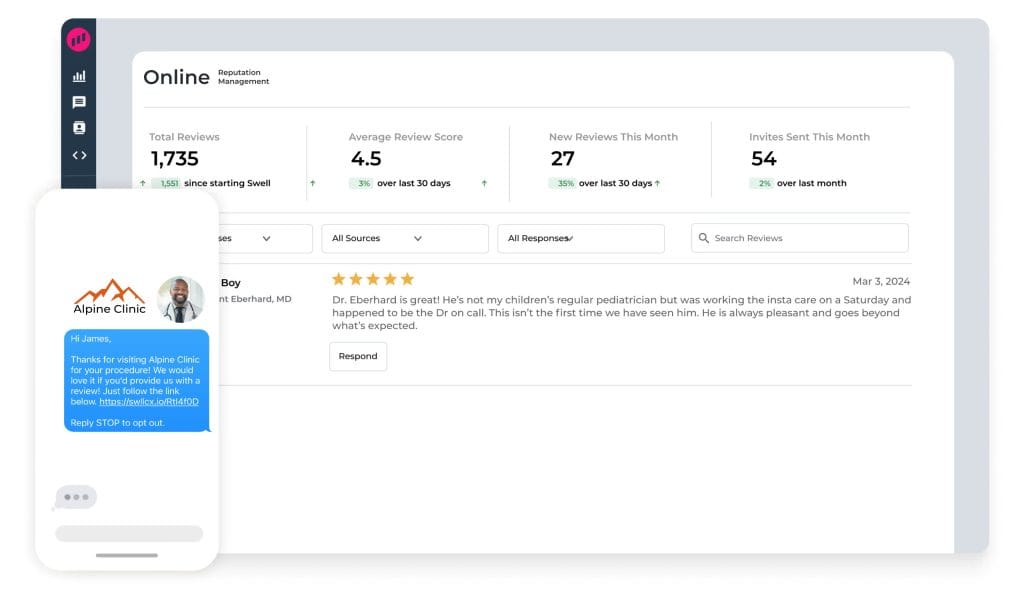
Swell does not publicly disclose pricing on its website. The platform is exclusively healthcare-focused and requires a demo for a custom quote based on location count and selected modules (ORM, PXI, EXI). HIPAA and SOC2 compliance are confirmed — if your agency serves dental practices, medical groups, or specialty clinics, Swell is the only dedicated platform built entirely around healthcare compliance requirements. For agencies serving any other industry, Swell is not relevant.
Podium — SMS-First, Not Reseller-Friendly
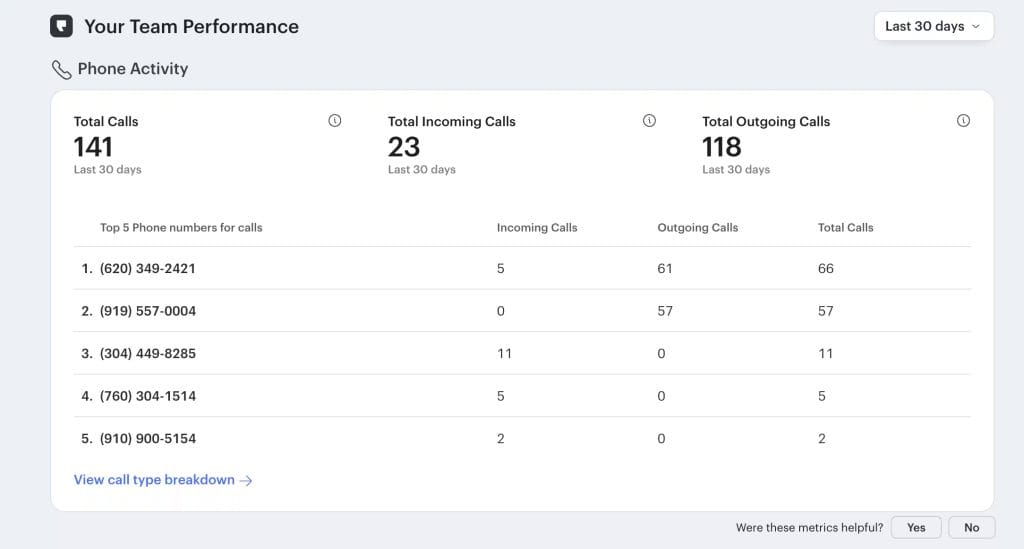
Podium does not publicly disclose pricing on its website. Third-party sources (ReputationStacker, SocialPilot, Emitrr) consistently report Core at approximately $399/month and Pro at approximately $599/month. Podium is a messaging platform where review management sits alongside two-way SMS, webchat, and payments. SMS review request performance is strong for auto dealers, dental offices, and retail.
But here’s the catch for agencies: Podium isn’t built as a white-label or reseller platform. If building a branded reputation management service under your agency’s name is the goal, the structure isn’t set up for it the way Grade.us or Vendasta are. Podium is better suited as a direct tool for a business that wants to manage its own review process.
Yext — Listings and Reviews Together in One Platform
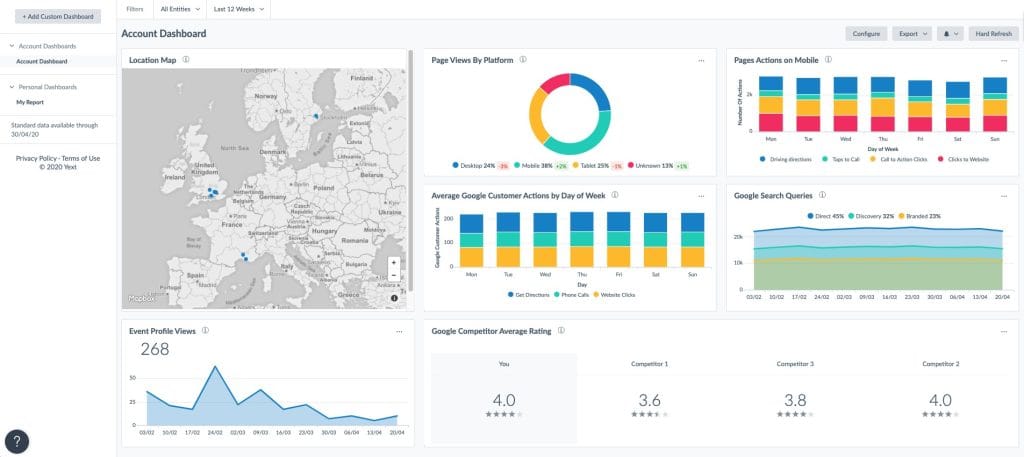
Yext controls how your client’s name, address, and hours appear across search engines, maps, and voice assistants, with review monitoring included. One critical detail many articles get wrong: Yext’s small-business pricing is per year, not per month. That makes the actual monthly cost far lower than it appears at first glance:
| Emerging | Essential | Complete | Premium |
|---|---|---|---|
| $199/year | $449/year | $499/year | $999/year |
| ~$17/mo equivalent | ~$37/mo equivalent | ~$42/mo equivalent | ~$83/mo equivalent |
Yext’s review management is secondary to its listings product. If your client’s primary need is ensuring consistent NAP data across 200+ directories with review monitoring as a bonus, Yext makes sense and the price point is surprisingly affordable. If the primary need is actually generating more reviews, a dedicated review platform will outperform it.
ReviewTrackers — Enterprise Monitoring (Now Part of Press Ganey Forsta)
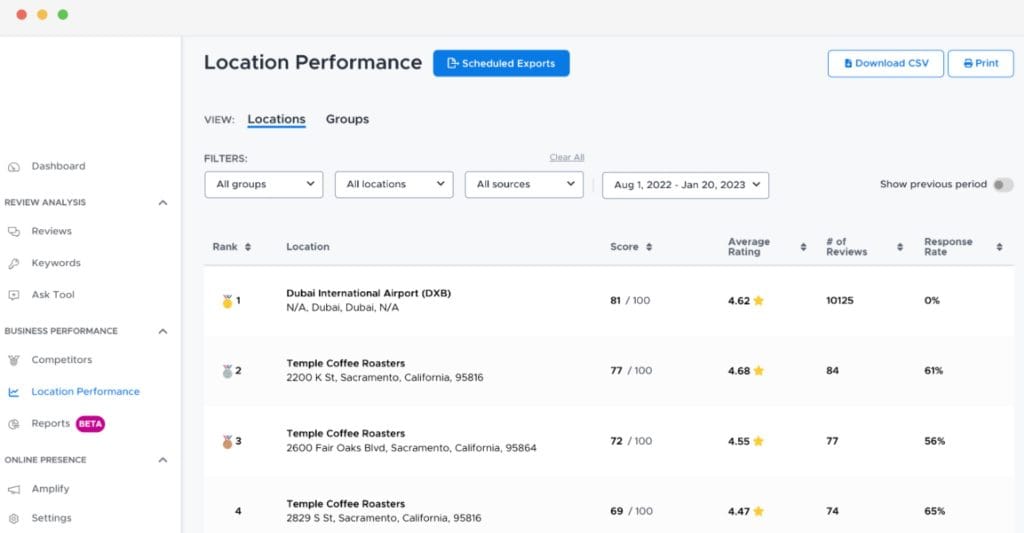
ReviewTrackers was acquired by InMoment in June 2022, and InMoment was subsequently acquired by Press Ganey Forsta in May 2025. The brand and website remain live, but all pricing is enterprise/custom and requires a demo. The product monitors reviews across 100+ sites with natural language processing for sentiment analysis.
A word of caution: given the dual acquisition, agencies considering ReviewTrackers should verify the current product roadmap and support structure directly with the vendor. Enterprise review monitoring is the core strength; review generation tools are secondary to what dedicated platforms offer.
Reputation.com — Large Enterprise and Franchise Systems
Reputation.com is one of the few enterprise platforms that actually publishes its pricing:
| Rep Core | Rep Core + Pulse | Rep Core + Surveys |
|---|---|---|
| $80/location/month | $115/location/month | $150/location/month |
This platform doesn’t make sense for agencies managing small local businesses — the per-location costs don’t work at that scale. But for large enterprises running hundreds of locations, the NPS integration and operational analytics offer capabilities that smaller platforms simply don’t have.
Chatmeter — Enterprise Multi-Location Intelligence (Now Part of Alchemer)
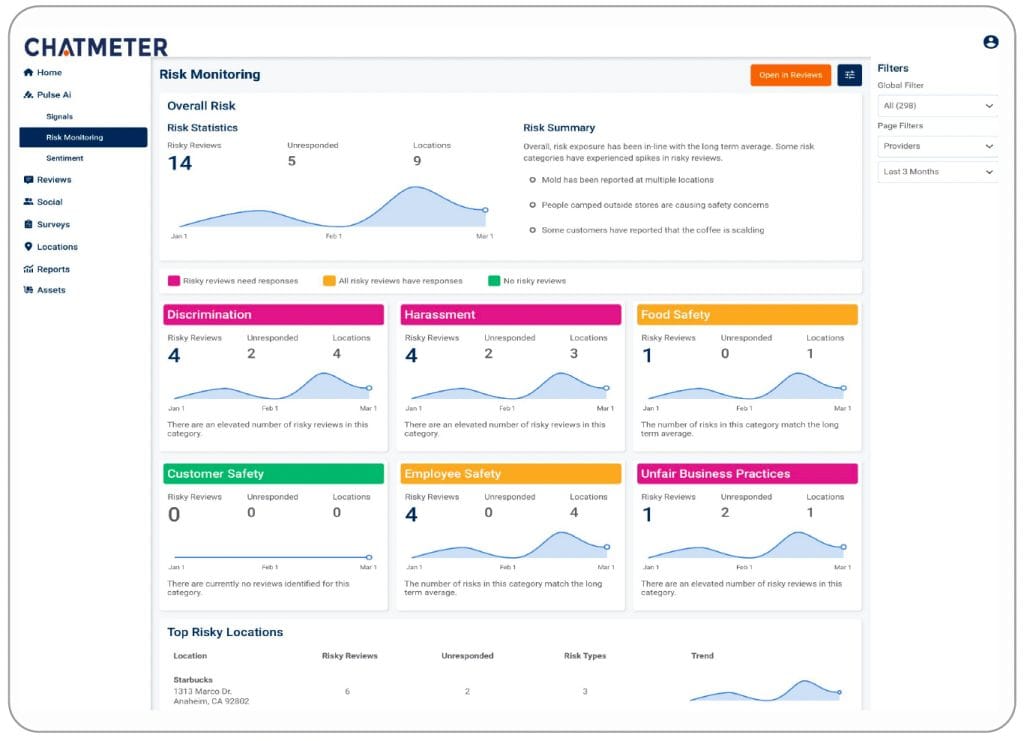
All pricing is custom and requires a demo. Chatmeter was acquired by Alchemer in September 2025. Third-party procurement data estimates annual contracts typically fall between $16,000 and $42,000 depending on location count and feature scope. The platform excels at competitive intelligence, location performance scoring, and AI-powered analytics that give corporate teams visibility into how individual locations perform relative to market benchmarks.
Like ReviewTrackers, this is not a practical option for agencies managing small or mid-size local businesses. The economics only work for agencies handling large enterprise clients where the per-location cost amortizes across 50 or more locations.
Trustpilot Business — Best for E-Commerce and B2B Clients
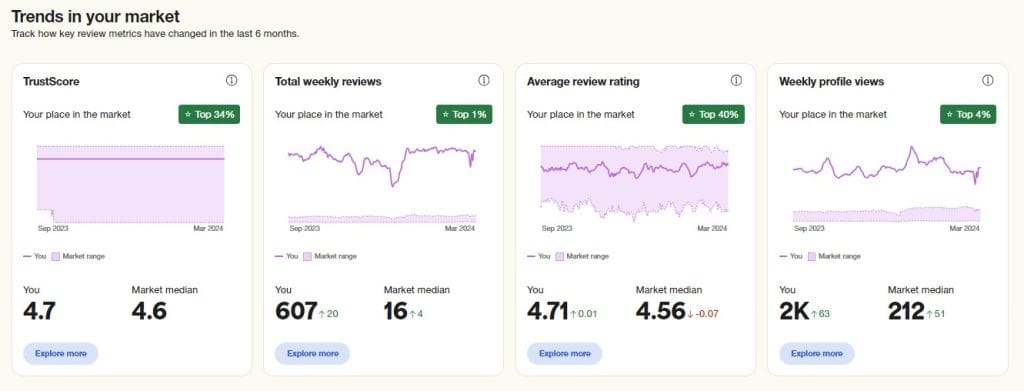
Trustpilot is a public consumer review platform, not a traditional review management tool — and that distinction changes how it fits into an agency’s stack. Trustpilot restructured its pricing in late March/early April 2026, so if you’ve seen older figures floating around, they’re likely outdated. Here’s what’s current:
| Starter | Plus | Premium | Enterprise |
|---|---|---|---|
| $99/mo | $319/mo | $799/mo | Custom quote |
| 1 user, 1 domain | 3 users, up to 3 domains | 10 users, unlimited domains | 1,000 users, unlimited |
The specific value for e-commerce and B2B clients is that Trustpilot reviews appear in Google Shopping ads and organic search results as trust signals, which influences click-through rates and conversion before a prospect even reaches the client’s website. For a local restaurant or plumber, Trustpilot reviews carry little practical weight. Agencies with e-commerce clients will find it worth recommending; agencies serving primarily local service businesses can skip it.
How Agencies Run Review Management Day-to-Day
The software is one part of the equation. The other part is the process built around it. Agencies that generate visible, attributable results for clients are not necessarily running the most expensive platforms — they’re running a consistent workflow that leaves nothing to chance.
The Review Request Process
The most effective setup is a combined SMS-then-email sequence triggered within 24 hours of a completed transaction or service visit. The SMS goes first because it’s seen faster. If no action is taken within 48 hours, an email follow-up provides a second touchpoint. GatherUp’s data shows this combined approach produces 26 reviews per 100 requests — 73% more than email alone.
But timing depends on the industry, and getting this wrong noticeably hurts conversion:
- Home services: Trigger within 24 hours of job completion, while the homeowner is still happy and the experience is fresh.
- Healthcare: Within 2–3 hours of the appointment. Patients are most reflective immediately after a visit — by the next day, the urgency to share fades.
- Retail and e-commerce: 3–5 days after delivery, so the customer has actually used the product. Asking too early gets you “It arrived fine” instead of a substantive review.
- Restaurants and hospitality: Same day, ideally within 2–4 hours of the visit. A follow-up text that evening while the meal is still a talking point converts better than anything the next morning.
Responding to Reviews at Scale
BrightLocal’s data shows that 89% of consumers are “fairly” or “highly” likely to use a business that responds to all of its reviews. Womply’s research found that responding to at least 25% of reviews correlates with 35% more revenue. The question isn’t whether to respond — it’s how to do it efficiently across 20+ client accounts without burning through your team’s time.
Most platforms now offer AI-generated response drafts. Here’s how to use them without sounding robotic:
- Positive reviews (3–5 stars): AI drafts are good enough with minor personalization. Add the customer’s name, reference something specific from their review (“glad the team got your AC fixed before the weekend”), and you’re done in 30 seconds.
- Negative reviews (1–2 stars): A human should always write or substantially edit these. The client’s voice matters here — a response that sounds like it came from a bot makes things worse, not better. Acknowledge the issue, avoid being defensive, and offer to resolve it offline.
- Mixed reviews (3 stars): These are actually opportunities. Thank the customer for the honest feedback, address the concern, and highlight what you’re doing about it. Prospective customers read these closely.
Reporting That Actually Drives Retention
The report that keeps a client paying for review management month after month is not a PDF full of charts they don’t understand. It’s a simple, one-page summary that answers three questions:
- Volume: How many new reviews did we generate this month?
- Quality: What is the current average rating, and how has it trended?
- Context: How does this compare to last month, the same month last year, and your top competitor?
That competitor comparison is the retention secret weapon. “You have 347 Google reviews at 4.6 stars; your top competitor has 198 at 4.2” — the retention argument makes itself. The client doesn’t just see value; they see a competitive advantage they don’t want to lose.
Compliance: What Every Agency Needs to Know
Review management is now regulated territory. Agencies that don’t understand the rules are exposing themselves and their clients to meaningful legal and reputational risk. Here’s what you need to know and what to watch out for.
What the FTC Rule Actually Prohibits
The FTC Final Rule carries fines of $53,088 per violation — and that’s per review, not per campaign. Six specific practices are now illegal:
- Fake reviews from people who never used the product or service, including purchased reviews from review farms or freelancers
- Undisclosed incentivized reviews — it’s legal to offer a discount for a review, but only if the incentive is clearly disclosed in the review itself
- Insider reviews from employees, contractors, or owners who don’t disclose their relationship to the business
- Review suppression through threats, intimidation, contractual gag clauses, or baseless legal threats against reviewers
- Fake social engagement including buying followers, likes, or views to create a false impression of popularity
- Review gating — using a satisfaction survey to filter who gets asked for a public review. This is the one that trips up the most agencies, because many platforms used to offer it as a standard feature
What Is and Isn’t Review Gating
Review gating is when you send a customer a survey, and only customers who respond positively are directed to leave a public review. Unhappy customers are either redirected to a private feedback form or simply never prompted to review publicly. This is explicitly prohibited by the FTC rule and independently violates Google’s and Yelp’s own platform policies.
What is allowed: asking every customer for a review through the same process, regardless of their likely satisfaction level. You can use a post-service survey for internal feedback purposes, and you can even ask the survey before the review request — as long as the review request goes to everyone, not just happy respondents.
Google’s Enforcement Escalation
Google removed over 240 million policy-violating reviews in 2024. Beyond just removing reviews, Google now publicly flags profiles where suspicious patterns are detected with a banner visible to every searcher. The patterns that trigger flags include:
| Red Flag Pattern | Why It Triggers Google’s System |
| Sudden volume spikes | A business that averages 3 reviews/month suddenly getting 30 in a week signals coordinated solicitation |
| Single-review accounts | Reviews from accounts that have only ever reviewed one business are a classic fake review fingerprint |
| Geographic mismatch | Reviews from locations far outside the business’s service area suggest purchased reviews from overseas providers |
| Identical language patterns | Multiple reviews using similar phrasing or structure suggest they were written by the same person or generated by a template |
Prevention is the only viable strategy. Once a client’s profile gets that banner, the reputational damage is done and there’s no quick fix to remove it.
How to Choose the Right Platform for Your Agency
The comparison table above gives a quick reference, but the decision logic below covers the factors that the table can’t. The right platform depends less on which one has the most features and more on which one fits the way your agency actually operates and the types of clients you serve.
Match the Platform to What Your Clients Actually Need
- Mostly small local businesses at 1–3 locations: Grade.us, NiceJob, BrightLocal, or LocalClarity. All offer affordable per-client economics and strong white-label reporting without enterprise pricing minimums.
- Multi-location clients at 5–50 locations: Birdeye, ReviewTrackers, or Vendasta. Run the per-location math on your actual largest current client before committing — not on a hypothetical average.
- Healthcare or medical practices: Swell for agencies serving exclusively healthcare, or Birdeye for mixed portfolios that include healthcare alongside other industries.
- Home service businesses: NiceJob. The native integrations with ServiceTitan and Jobber produce automation that is genuinely difficult to replicate on a general-purpose platform.
- Full-service reseller model: Vendasta. One white-label platform covering review management, listings, social media, SEO, and advertising, all under your agency’s brand.
- E-commerce or B2B SaaS clients: Trustpilot Business. Review presence on the platform ties directly to Google Shopping ad performance, making the impact measurable in a way most review tools can’t match.
Run a Real Trial Before Signing Annually
Every platform worth evaluating offers either a free trial or a short-term demo period. Before signing an annual contract, test on at least two real clients across different industry categories for 30 to 60 days. Here’s what to actually test during that window:
- Customer support responsiveness: Call or chat support once during the trial before you actually need them. How fast they respond when nothing is on fire tells you what to expect when something is.
- Review generation conversion rate: Use your client’s real customer list, not a test list or vendor benchmark. The gap between what the sales team promises and what your actual audience does is often significant.
- Dashboard speed: How quickly do new reviews appear? The difference between real-time and a 24-hour lag changes how you staff your response workflow — and whether you can meet a same-day response SLA.
- AI response quality: Run it on reviews that actually came in during the trial, including at least one negative review. A draft that sounds robotic on a complaint is worse than no draft at all.
Bottom Line
Your clients’ Google profiles are being read by 96% of their potential customers before those people ever call or click. Reviews are 20% of local search rankings. 45% of consumers are using AI tools to find local businesses right now. And the FTC is actively enforcing its fake review rule.
The platform you pick matters. But the process you build around it matters more. If your team isn’t responding consistently, isn’t watching for automation failures, and isn’t delivering reports clients can actually point to—the software doesn’t fix that.
Get the workflow right first. The platform is just the tool that makes it scalable.
Review Management Software FAQ
Straight answers to the most-searched questions about reviews, platforms, and compliance
Review management software is a platform that centralizes how a business generates, monitors, responds to, and reports on customer reviews across Google, Yelp, Facebook, and 100+ other sites — all from a single dashboard.
Instead of logging into each review site individually, users see every new review in one place, send automated review requests by SMS and email, reply directly from the platform, and pull reports showing volume, rating trends, and competitor benchmarks.
Yes, and the impact is measurable. Womply’s analysis of 200,000 small businesses found that businesses responding to at least 25% of their reviews earn 35% more revenue than average, and businesses rated 4.0-4.5 stars earn 28% more than the average business.
On the consumer side, 96% of consumers read reviews before making a purchase decision, and 83% use Google specifically. Reviews aren’t a marketing nice-to-have — they’re a direct input to whether prospects call, click, or walk in.
There’s no magic number, but volume relative to competitors matters more than any absolute threshold. A business with 347 reviews at 4.6 stars looks dramatically stronger than a competitor with 198 reviews at 4.2, even though both have “plenty” of reviews by absolute standards.
Recency matters just as much as volume. 74% of consumers only care about reviews from the last three months, so a business with 500 old reviews and nothing recent loses to a competitor with steady, current flow. Aim for consistent monthly velocity rather than hitting a single milestone.
White-label means the software is rebranded under your agency’s name — clients log in at your domain, receive review requests from your email address, and see reports with your logo instead of the vendor’s. The underlying platform is invisible to the end client.
True white-label has four parts: a branded login experience at your domain, outbound communications from your sender address, reports without any “Powered by” watermarks, and no extra annual fee to enable it. Grade.us and Vendasta handle all four cleanly; Podium and Trustpilot don’t offer real white-labeling at all.
Review management is the narrower practice: generating, monitoring, and responding to reviews on sites like Google, Yelp, and Facebook. Reputation management is broader — it includes reviews plus social media mentions, press coverage, brand search results, and sometimes survey data.
For most local businesses, review management is 80% of what “reputation management” actually means in practice, because reviews are what prospects actually see when they search. Platforms like Reputation.com lean toward the broader definition; Grade.us and NiceJob focus tightly on reviews.
For a single-location small business, NiceJob at $75/month or BrightLocal’s Grow plan at $59/month are the strongest values. NiceJob is the better choice for home service businesses because of its CRM integrations; BrightLocal is better for any business that also wants local SEO features in the same tool.
For agencies managing small businesses on behalf of clients, Grade.us at $110/month is purpose-built for that workflow and includes deep white-labeling on every tier.
LocalClarity is the cheapest option at $10/month per location on monthly billing, or $8/month per location on annual billing, with no minimum location count. For multi-location clients where other platforms charge $299+/location, this is often the only viable choice.
Yext’s Emerging plan is also cheap at $199/year (roughly $17/month equivalent), but it’s listings-focused with review monitoring as a secondary feature — not a true review generation tool.
Birdeye doesn’t publish pricing publicly, but third-party sources consistently report three tiers priced per location on annual billing: Starter at approximately $299/month per location, Growth at approximately $349/month per location, and Dominate at approximately $449/month per location. Monthly billing runs roughly $389/location at the entry tier.
An exact quote requires a demo. Birdeye requires annual commitments, so expect the advertised rates to apply only with a 12-month contract.
Podium is worth it for a single business wanting SMS-first review requests bundled with webchat and payments, at roughly $399/month for Core or $599/month for Pro per third-party sources. Its SMS performance is strong for auto dealers, dental offices, and retail.
It’s not worth it for agencies trying to build a white-label reputation service — Podium isn’t structured as a reseller platform the way Grade.us or Vendasta are. Choose Podium when a business wants to manage its own reviews directly, not when an agency wants to offer the service under its brand.
Choose Grade.us if review management is your core service. Pricing is per-seat ($110-$2,500/month for 1 to 100 seats), white-labeling is included on every tier, and costs scale predictably as you add clients without per-location surprises.
Choose Vendasta if you want to resell multiple services — reviews, listings, social, SEO, and advertising — under one brand. The $99/month platform fee covers marketplace access, and the Reputation AI product costs roughly $15-$35 per location wholesale. Vendasta is the broader business; Grade.us is the deeper tool.
For 5-50 locations, Birdeye at approximately $299/location is the most capable mainstream option. For 50+ locations, Reputation.com at $80/location or Chatmeter (custom pricing, typically $16K-$42K annually) offer enterprise analytics that smaller platforms lack.
For budget-sensitive multi-location work, LocalClarity at $10/location/month is the only platform where a 30-location client doesn’t trigger a four-figure monthly bill. Run the math on your actual largest client before choosing — per-location pricing scales fast.
NiceJob has the deepest native integrations with ServiceTitan, Jobber, and Housecall Pro, triggering review requests automatically when a job is marked complete in the CRM. This is why it’s the default choice for plumbers, HVAC companies, roofers, and landscapers.
The advantage isn’t just convenience — a review request sent within 24 hours of job completion converts significantly better than a weekly batch email, because the customer is still actively happy about the experience.
Both, in sequence. Per GatherUp’s data, SMS alone produces about 20 reviews per 100 requests, email alone produces about 15, and an SMS-first sequence with an email follow-up 48 hours later produces about 26 — 73% more than email alone.
SMS wins on speed and open rate; email wins on detail and second-chance delivery for people who missed the text. Using both captures customers who respond to either channel, which is why the combined approach outperforms either one individually.
Timing depends on the industry. Home services should send within 24 hours of job completion. Healthcare should send within 2-3 hours of the appointment. Restaurants and hospitality should send the same day, ideally 2-4 hours after the visit. Retail and e-commerce should wait 3-5 days after delivery so the customer has actually used the product.
The underlying principle: ask when the customer has enough experience to say something meaningful, but before the emotional peak fades. Too early gets “it arrived fine”; too late gets no response at all.
A human should always write or substantially edit responses to 1-2 star reviews — AI drafts sound dismissive on complaints and make things worse. Acknowledge the specific issue raised, avoid being defensive, and offer to resolve it offline with a direct contact method.
Responding is not optional. 89% of consumers are fairly or highly likely to use a business that responds to all its reviews, and prospects read negative review responses closely to judge how the business handles problems. A thoughtful reply to a bad review often converts more prospects than the review itself loses.
Within 24-48 hours for positive reviews, within 24 hours for negative reviews. Speed signals attentiveness to everyone reading the profile later, not just the reviewer. A negative review that sits unanswered for two weeks tells prospects the business doesn’t pay attention.
For agencies managing multiple clients, AI drafts work fine for 3-5 star reviews — add the customer’s name and one specific detail and the response is done in 30 seconds. Save human effort for negative and mixed reviews where voice actually matters.
Only if the review violates Google’s policies — fake reviews from people who never used the business, reviews containing hate speech or personal information, reviews from competitors, or reviews unrelated to the actual experience. Negative reviews that are simply unhappy customers cannot be removed, even if the business disputes the account.
Flagging works through the Google Business Profile reporting tool, but approval isn’t guaranteed and can take weeks. Responding professionally is usually more effective than trying to get a review removed.
Three things, on one page: volume (how many new reviews this month), quality (current average rating and trend), and context (this month vs last month, same month last year, and top competitor).
The competitor comparison is what drives retention. A line like “you have 347 Google reviews at 4.6 stars; your top competitor has 198 at 4.2” makes the value of the service obvious without any chart-heavy dashboard. Keep reports simple — clients cancel confusing reports, not simple ones.
Per BrightLocal’s Local Consumer Review Survey, 83% of consumers who are asked to leave a review do so. The bottleneck isn’t willingness — it’s whether the business actually asks, consistently, through the right channel, at the right moment.
The gap between “customers who would leave a review if asked” and “customers who actually get asked” is the single biggest source of missed review volume for most local businesses.
Yes. The FTC’s Final Rule on fake reviews explicitly prohibits review gating — the practice of sending a survey first and only directing happy customers to public review sites. It also independently violates Google’s and Yelp’s platform policies.
Fines are $53,088 per violation, calculated per review rather than per campaign, and enforcement is active. If a review management platform still offers gating as a feature, that’s a serious red flag about the vendor.
Six specific practices are illegal under the rule: fake reviews from people who never used the product, undisclosed incentivized reviews, insider reviews from employees or owners without disclosure, review suppression through threats or gag clauses, fake social engagement like purchased followers, and review gating.
Offering a discount for a review is still legal, as long as the incentive is disclosed in the review itself. The line is whether the practice creates a misleading picture of genuine customer sentiment.
Paying someone to write a review of a product they never actually used is illegal and carries FTC fines of $53,088 per review. Paying people to write fake reviews, buying reviews from review farms, or hiring freelancers to leave reviews all fall into this category.
Offering a real customer a discount or small incentive in exchange for an honest review is legal, but only if the incentive is clearly disclosed in the review itself. “I received a free product in exchange for my honest review” is the kind of disclosure that keeps the practice compliant.
Only with clear disclosure of the employment relationship. Undisclosed insider reviews from employees, contractors, or owners are explicitly banned under the FTC’s Final Rule and carry the same $53,088 per-violation fine as other fake review practices.
The practical answer is that employee reviews are almost never worth the compliance risk. Google’s detection systems flag them based on account patterns anyway, and the reputational damage from a “suspected fake reviews” banner outweighs any volume gain.
Google now shows a public “Suspected fake reviews were recently removed” banner on profiles where its detection systems find suspicious patterns. Common triggers include sudden volume spikes (going from 3 reviews/month to 30 in a week), reviews from single-review accounts, reviewers located far outside the service area, and reviews using near-identical language.
Once the banner appears, there’s no quick fix to remove it. Prevention through steady organic review velocity from actual local customers is the only reliable strategy.
Yes, but only if two conditions are met: the customer must write an honest review (not a review the business pre-approves), and the incentive must be disclosed within the review itself. Without disclosure, the practice falls under the FTC’s undisclosed incentivized reviews prohibition.
Platforms like Google, Yelp, and TripAdvisor also have their own policies on incentivized reviews that are sometimes stricter than the FTC rule. Google, for example, discourages incentivized reviews entirely regardless of disclosure — so always check individual platform policies before launching an incentive program.
Yes. Reviews account for roughly 20% of local pack ranking factors per Whitespark’s Local Search Ranking Factors survey, making them one of the largest controllable inputs to local SEO visibility.
Both volume and recency matter. A business with steady, recent reviews outranks one with more total reviews that are mostly old, because freshness signals ongoing relevance to Google’s algorithm. Review response rate and keyword mentions within reviews also contribute.
45% of consumers now use AI tools like ChatGPT for local business recommendations, and those tools draw heavily from current review content when making suggestions. Businesses with strong, recent review profiles appear in AI-generated recommendations; businesses with stale or thin review activity don’t.
The practical implication is that review management now affects visibility in two channels at once — traditional search rankings and AI-powered recommendations. Both reward the same behavior: consistent review generation, responsive engagement, and recent activity.
Less than they used to. Consumer trust in reviews has dropped to 42%, down from 79% in 2020, largely because of widespread awareness of fake reviews and AI-generated content. Despite this, 96% of consumers still read reviews before buying — they just scrutinize them more carefully.
What this means practically: authenticity signals matter more than raw volume. A business with 200 detailed, recent, specific reviews from verified local customers is trusted more than one with 800 short generic reviews that look suspicious. Quality beats quantity more than it used to.
74% of consumers only care about reviews from the last three months. Anything older is effectively invisible to most prospects, even if it’s a glowing 5-star review. A business with 500 reviews from two years ago and nothing recent looks worse than a competitor with 50 reviews from the last 90 days.
This is why steady monthly review velocity matters more than hitting a big one-time milestone. The goal isn’t a total count — it’s an unbroken stream of recent reviews that prospects actually pay attention to.
Often, yes. A perfect 5.0 rating can actually hurt trust because consumers have learned to associate flawless ratings with fake reviews. Ratings between 4.0 and 4.5 stars correlate with 28% more revenue than the average business per Womply’s analysis — the sweet spot is “clearly great” rather than “suspiciously perfect.”
A mix of mostly 5-star reviews with occasional 3-4 star reviews that the business has responded to professionally looks more credible than a wall of identical 5-star praise. Small imperfections handled well are a trust signal, not a weakness.
Google is the dominant platform — 83% of consumers check Google reviews specifically before buying — but Yelp and Facebook still matter for specific audiences. Yelp retains strong influence in restaurants, bars, and urban service businesses, while Facebook matters most for community-driven businesses where local social networks drive discovery.
The practical priority for most local businesses: maximize Google first, then Yelp if the business category has active Yelp usage, then Facebook third. Spreading effort thin across 10 review sites produces worse results than dominating the one or two that actually drive customers.
Give clients a reporting experience that keeps them coming back. Build branded, multi-channel dashboards in minutes.
Start Your Free Trial Today