
The best Adverity alternative depends on which job Adverity does for you today. If you need governed pipelines into a data warehouse, look at Funnel, Improvado, Fivetran or Airbyte. If you mostly turn that data into client reports and dashboards, a reporting platform like Swydo, AgencyAnalytics or DashThis covers the job for a fraction of the cost, with monthly billing.
That split matters more than any ranking. Adverity is built for enterprise brands and large agency groups that pull from dozens of platforms, clean the data and push it into Snowflake or BigQuery. Plenty of teams buy it for exactly that. Plenty more end up paying enterprise prices to fill a monthly Google Ads report.
Below, you’ll see what Adverity is and what it costs, a quick test for which kind of replacement you need, 13 tools grouped by job with real pricing, and a switching plan that protects your historical data.
What Is Adverity and Why Do Teams Look for Alternatives?
Adverity is a marketing data platform that connects to 600+ sources, harmonizes the data and sends it to a warehouse, BI tool or AI assistant. Teams start looking elsewhere when the price, the setup effort or the annual contract outgrows the job they actually use it for. The three subsections below cover what you’re buying, what it costs and where the friction shows up.
Adverity Is the Plumbing, Not the Faucet
One analogy explains most of this market. Adverity is plumbing. It pipes data in from hundreds of sources, filters it and fills a central tank. Your clients never see plumbing. They see the faucet: the report, the dashboard, the email that lands on Monday morning.
Some companies genuinely need new plumbing. A global brand running 40 markets in five currencies, with a data team modeling spend in BigQuery, can’t run on a reporting tool alone. An agency with 25 clients on Google Ads, Meta and GA4 usually needs a great faucet and a short pipe.
Adverity now sells two products, which makes the analogy literal:
- Adverity Connect is the plumbing. Connectors, transformation and destinations, plus an API and an MCP server for AI tools.
- Adverity Atlas is an AI knowledge layer that sits on your warehouse (Snowflake, BigQuery, Databricks or Redshift) so AI agents answer questions using governed definitions of your metrics.
Which of those would you actually miss on Monday? Your answer points straight to the right category of replacement.
How Much Does Adverity Cost?
Adverity Connect is quote-only, billed annually and comes without a free trial. Adverity Atlas is the only product with a public list price, at $15,417 per month on an annual plan for its Standard tier.
| Plan | Price | What’s included |
|---|---|---|
| Connect Core | Quote, annual | 10 data sources, 1 destination, 25M rows/month, 5 workspaces |
| Connect Standard | Quote, annual | 25 data sources, 2 destinations, 60M rows/month, 35 workspaces |
| Connect Professional | Quote, annual | 40 data sources, 4 destinations, 100M rows/month, unlimited workspaces |
| Atlas Discovery | Free | A pilot phase that carries into a paid plan |
| Atlas Standard | $15,417/mo, billed annually | Up to 10 workspaces, 25 agents and users |
| Atlas Enterprise | Custom | No limits, private cloud or on-prem options |
So what do buyers actually pay for Connect? Vendr’s purchase data puts the median annual Adverity contract at about $53,650, with deals ranging from roughly $13,000 to $168,000. Budget five figures a year before you book the demo.
Pricing moves on three dials: data sources, rows per month and destinations. Watch the row count closely. A busy Meta account broken down daily by ad, placement and country can chew through 25 million rows faster than you’d guess.
Why Teams Start Shopping Around
Cost is the loudest reason, but setup time is the one that hurts day to day. On G2’s Adverity vs Funnel comparison, reviewers score Adverity 7.6 out of 10 for ease of setup against Funnel’s 8.6, and 8.0 for ease of admin against 8.9. G2 buyers also report an average of two months to implement and 13 months to see a return.
That’s fine with a data engineer and a long runway. It’s painful for a 15-person agency that needed reports live next month.
The other reasons come up again and again:
- The contract outlasts the need. Annual terms make it hard to scale down when a big client walks.
- It’s more platform than the team uses. Many buyers touch a sliver of the 600+ connectors and none of the warehouse features.
- There’s no way to test first. Without a trial, you’re judging fit from a sales demo.
To be fair, reviewers praise Adverity’s integrations and support, and plenty of enterprise teams switch to it for exactly those strengths. With the data team and the budget, it’s a strong platform. The rest of this guide is for everyone else.
Which Adverity Alternative Fits Your Situation?
Pick the category first and the tool second. Adverity alternatives fall into four groups: enterprise marketing data platforms, warehouse pipelines, lightweight connectors and agency client reporting platforms. Comparing a reporting tool against a warehouse pipeline on the same scorecard is how teams end up with the wrong one.
Run the Plumbing vs Faucet Test
Three questions sort most teams in under a minute.
- Does someone on your team model data in a warehouse every week? If yes, you need plumbing (Funnel, Fivetran, Airbyte, Improvado). If nobody writes SQL, a warehouse just becomes an expensive place for data to sit.
- Who reads the output? If it’s clients and account managers reading reports, you need a faucet (Swydo, AgencyAnalytics, DashThis, Whatagraph, Databox).
- Where does the data need to land? If it’s Google Sheets, Data Studio or an AI assistant, a connector (Supermetrics, Windsor.ai, Coupler.io) is often enough.
Which kind of Adverity alternative do you need?
Find the card that matches your situation. Purple cards are plumbing. Green cards are faucets.
Plumbing
Many teams and tools use the same governed marketing data
Choose an enterprise marketing data platform.
Funnel, Improvado
Plumbing
A data team models data in a warehouse every week
Choose a warehouse pipeline (ELT).
Fivetran, Airbyte, Boomi Data Integration
Short pipe
Data lands in Sheets, Data Studio or an AI assistant
Choose a lightweight connector.
Supermetrics, Windsor.ai, Coupler.io
Faucet
The output is client reports, dashboards and alerts
Choose an agency reporting platform.
Swydo, AgencyAnalytics, DashThis, Whatagraph, Databox
Nobody on the team writes SQL? Skip the plumbing cards. A warehouse with no one to model it is an expensive place for data to sit.
The pull toward plumbing is real, because marketing data integration gets harder with every platform you add. According to Salesforce’s State of Marketing report, the average marketing organization uses at least seven data sources. But seven sources feeding client reports is a reporting problem, not a data engineering one.
Quick Picks by Job
Benchmark
Adverity Connect
The tool you’re replacing
Quote only, annual
+
Monthly billingAnnual
Trial or free planNo
WarehouseYes
White-label reportsNo
AI or MCPMCP server and API
Enterprise marketing data
Funnel
You need governed warehouse data with a lighter setup
From $300/mo, billed annually
+
Monthly billingAnnual only
Trial or free planThrough sales
WarehouseYes
White-label reportsAgency Advanced
AI or MCPFunnel AI and MCP
Improvado
You want the vendor to build and run your pipelines
Quote only
+
Monthly billingQuote
Trial or free planDemo
WarehouseYes
White-label reportsDashboards
AI or MCPAI and MCP
Warehouse pipelines
Fivetran
Your data team already runs a warehouse
Free up to 500K MAR, then usage-based
+
Monthly billingUsage-based
Trial or free planFree plan
WarehouseCore job
White-label reportsNo
AI or MCPTransformation via dbt
Airbyte
Your engineers want open source and full control
Free to self-host
+
Monthly billingUsage-based
Trial or free planFree self-host
WarehouseCore job
White-label reportsNo
AI or MCPConnector builder
Boomi Data Integration
Your company already runs on Boomi
Quote only
+
Monthly billingQuote
Trial or free planDemo
WarehouseCore job
White-label reportsNo
AI or MCPOrchestration
Lightweight connectors
Supermetrics
Your data ends up in Sheets, Data Studio or an AI assistant
$49/mo ($39/mo annual)
+
Monthly billingYes
Trial or free plan14-day trial
WarehouseEnterprise only
White-label reportsNo
AI or MCPClaude, ChatGPT, Copilot destinations
Windsor.ai
Budget matters more than governance
Free plan, then $23/mo ($19/mo annual)
+
Monthly billingYes
Trial or free planFree plan
WarehouseYes
White-label reportsNo
AI or MCPMCP
Coupler.io
You need no-code blending into Sheets or BI tools
Free plan, then $32/mo ($24/mo annual)
+
Monthly billingYes
Trial or free planFree plan
WarehouseYes
White-label reportsNo
AI or MCPAI integrations
Agency client reporting
AgencyAnalytics
A small roster wants one all-in price per client
$25/client/mo ($20 annual)
+
Monthly billingYes
Trial or free plan14-day trial
WarehouseNo
White-label reportsYes
AI or MCPMCP, AI insights
DashThis
You need simple dashboards for a few clients
$54/mo ($44/mo annual)
+
Monthly billingYes
Trial or free plan14-day trial
WarehouseNo
White-label reportsYes
AI or MCPAI Insights
Swydo
You report on 10+ clients and want monitoring, MCP, Slack and API access
$69/mo ($62/mo annual), 10 sources included
+
Monthly billingYes
Trial or free plan14-day trial
WarehouseVia API
White-label reportsYes, plus Client Portal
AI or MCPMCP, Slackbot, REST API, AI summaries
Whatagraph
You want blended data and can commit annually
From $812/mo, billed annually
+
Monthly billingAnnual only
Trial or free plan14-day trial
WarehousePrime only
White-label reportsYes
AI or MCPWhatagraph IQ
Databox
Your clients care most about goals and benchmarks
$99/mo ($79/mo annual), agency track
+
Monthly billingYes
Trial or free planFree plan
WarehouseNo
White-label reportsPremium or add-on
AI or MCPGenie AI analyst
Tap a tool for billing, trial, warehouse, white-label and AI details. Green means included, yellow means limited to certain plans, gray means not available or annual only.
Best Adverity Alternatives for Enterprise Marketing Data
Enterprise marketing data platforms replace Adverity like for like. They keep the connectors, transformation, storage and warehouse destinations, but change the price model, the setup effort or who does the maintenance. Pick from this group if you truly need the plumbing.
1. Funnel
The closest match to Adverity, with a separate track for agencies.
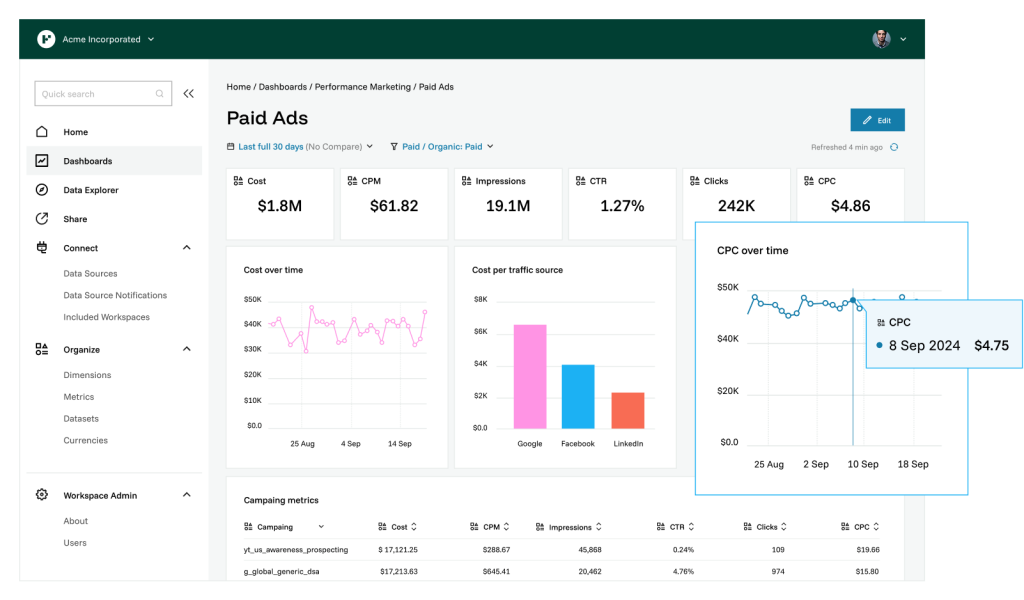
Funnel collects data from marketing platforms, stores it, lets you map and clean it, then ships it to warehouses, BI tools and spreadsheets. Unlike Adverity, it publishes prices and runs dedicated agency plans with unlimited workspaces, so you can separate clients cleanly.
The standout is Portals, white-label client reporting on the Agency Advanced plan, plus Funnel AI and an MCP server on every agency plan. G2 reviewers rate it ahead of Adverity on setup and admin.
- Pricing: Agency Standard from $300/mo and Agency Advanced from $600/mo, both billed annually (annual only). Brand plans follow the same $300 and $600 floors.
- Watch out: usage runs on flexpoints, and Funnel doesn’t publish what a flexpoint costs, so the listed price is a floor. The Digital Measurement add-on is another $2,250/mo, billed annually.
- What you gain over Adverity: a published starting price, an easier setup (G2 reviewers score it 8.6 against Adverity’s 7.6), no charge for data volume and unlimited agency workspaces.
- What you give up: a monthly option, since Funnel is still an annual contract, and anything like Adverity’s Atlas AI layer.
- Switch to it if: you need warehouse destinations and governed data but want a shorter setup and a price before the demo.
2. Improvado
An enterprise pipeline where the vendor does much of the building for you.
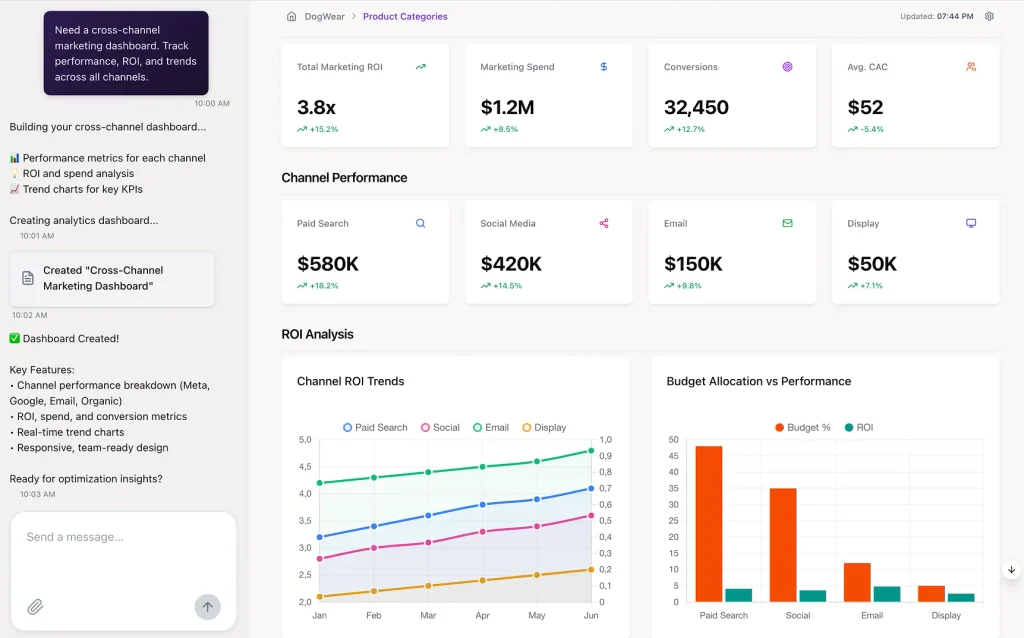
Improvado covers the same ground as Adverity, from extraction and harmonization to warehouse loading and dashboards. The difference is the service layer. Improvado leans on its own team to set up and maintain pipelines and data models, which suits marketing departments without in-house data engineers.
Its standout is that managed approach. You describe the reports and governance rules you need, and the vendor’s specialists help build them. It also offers AI and MCP access to your data.
- Pricing: quote only.
- Watch out: the buying motion looks a lot like Adverity’s, with an enterprise sales cycle and annual terms.
- What you gain over Adverity: a vendor team that builds and maintains your pipelines and data models, so connectors and mappings stay healthy without a data engineer on staff.
- What you give up: price transparency and contract flexibility. If the contract is why you’re leaving, Improvado won’t fix that.
- Switch to it if: Adverity’s setup and upkeep are the problem, not the budget.
Best Adverity Alternatives for Warehouse Pipelines
Warehouse pipelines (ELT tools) move raw data into Snowflake, BigQuery or Databricks and stop there. They’re cheaper and more flexible than Adverity for teams with data engineers, but you’ll need someone to model the data and another tool to show it.
3. Fivetran
The default warehouse pipeline, now with transformation under the same roof.
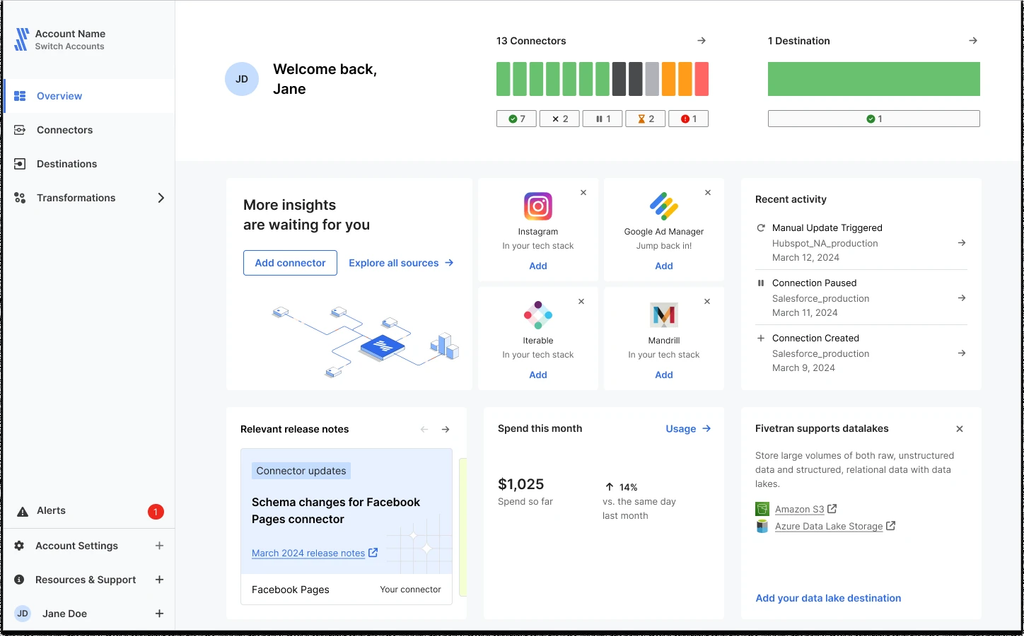
Fivetran syncs data from hundreds of SaaS tools and databases into your warehouse with very little upkeep. It merged with dbt Labs, the company behind the most widely used transformation tool, so ingestion and modeling now come from one vendor.
The standout is reliability at scale. Connectors handle API changes and schema drift for you, which is exactly the maintenance work that eats a data team’s week.
- Pricing: a free plan up to 500K monthly active rows (MAR), then usage-based, with a $5 monthly minimum per standard connection.
- Watch out: ad platforms restate conversions for days, and every re-synced row counts toward MAR. Deletes count too. Backfills can spike a bill.
- What you gain over Adverity: monthly, usage-based billing that starts free, low-maintenance connectors and transformation through dbt from the same vendor.
- What you give up: a marketer-friendly layer. Mapping, harmonizing and reporting all happen in your warehouse and BI tool, built by your data team.
- Switch to it if: you already run a warehouse with engineers and only used Adverity to load it.
4. Airbyte
The open-source pipeline you can run on your own servers.
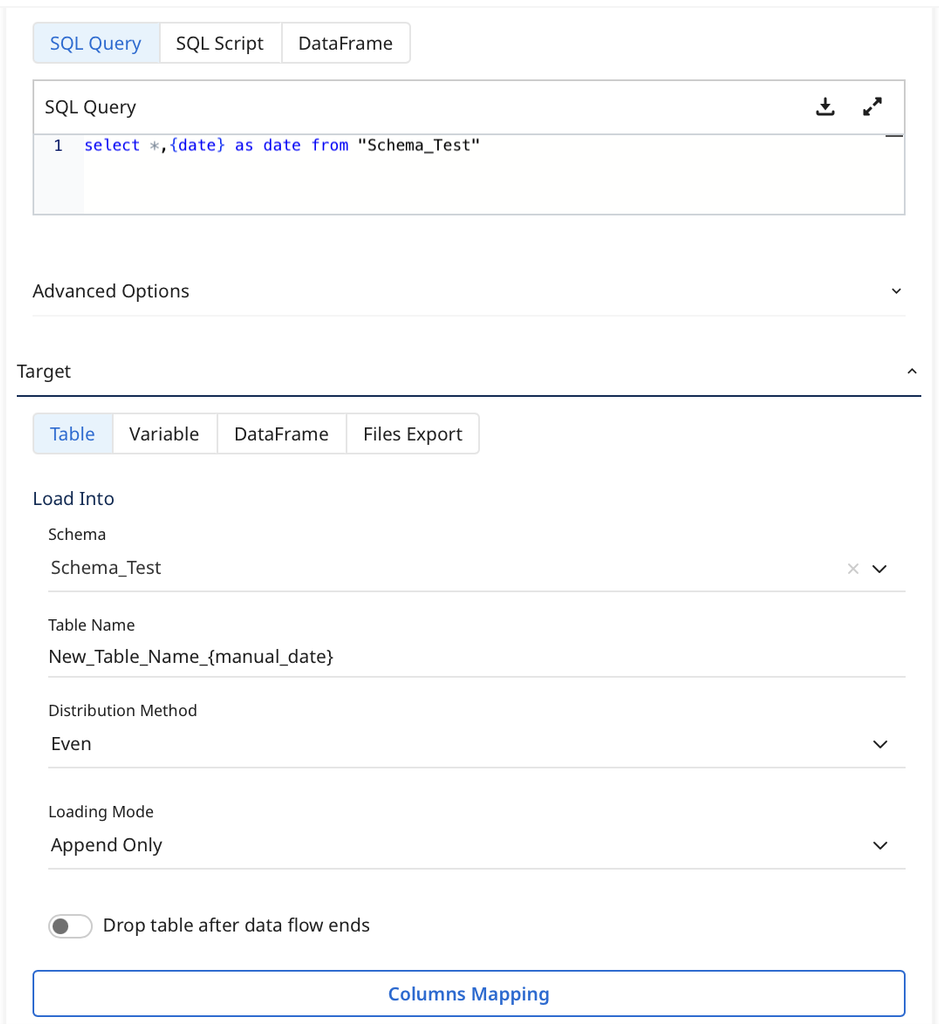
Airbyte offers a large open-source connector catalog you can self-host for free, plus a managed cloud version. It appeals to teams that want full control over where data lives and how connectors behave.
The standout is flexibility. If a marketing connector doesn’t exist, your engineers can build one with Airbyte’s connector builder rather than waiting on a vendor roadmap.
- Pricing: free to self-host. Cloud plans are usage-based.
- Watch out: free software isn’t free labor. When a platform API changes, a self-hosted connector is yours to patch.
- What you gain over Adverity: no license fee when self-hosted, full control over where data lives and the freedom to build any missing connector yourself.
- What you give up: managed upkeep. Your engineers run the infrastructure and build the marketing data model.
- Switch to it if: you have engineering capacity and want to stop paying per source.
5. Boomi Data Integration
The pipeline formerly known as Rivery, now part of Boomi.
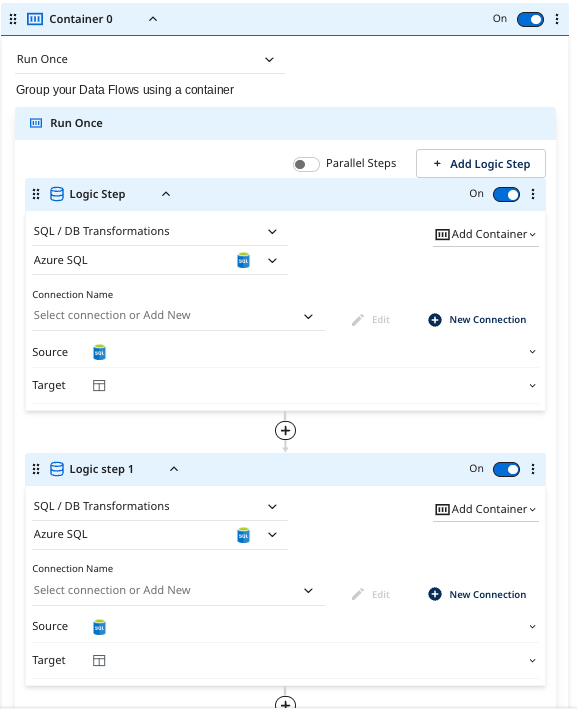
Boomi acquired Rivery in December 2024 and renamed it Boomi Data Integration. It combines ELT, transformation and orchestration, and it plugs into Boomi’s wider integration platform for companies that already run their business systems through Boomi.
The standout is orchestration. You can chain data pulls, transformations and downstream actions in one workflow instead of scheduling them separately.
- Pricing: quote only.
- Watch out: product names and plans changed with the acquisition, so confirm what’s included before comparing it with older Rivery quotes.
- What you gain over Adverity: marketing pipelines and business-system integrations orchestrated on one platform.
- What you give up: marketing-specific depth and any published pricing.
- Switch to it if: your company already runs on Boomi and wants marketing data in the same place.
Best Lightweight Connectors to Replace Adverity
Lightweight connectors pipe ad and analytics data into a destination you already use, like Google Sheets, Excel, Data Studio, a BI tool or an AI assistant. They’re the cheapest replacement when Adverity was only ever a pipe into a spreadsheet or dashboard.
One note before the list. Google renamed Looker Studio back to Data Studio, and the core tool is still free. The connectors aren’t. Partner connectors for non-Google platforms carry their own fees, so check what Data Studio really costs once you add Meta, LinkedIn and TikTok.
6. Supermetrics
The best-known connector, now feeding AI assistants as well as spreadsheets.
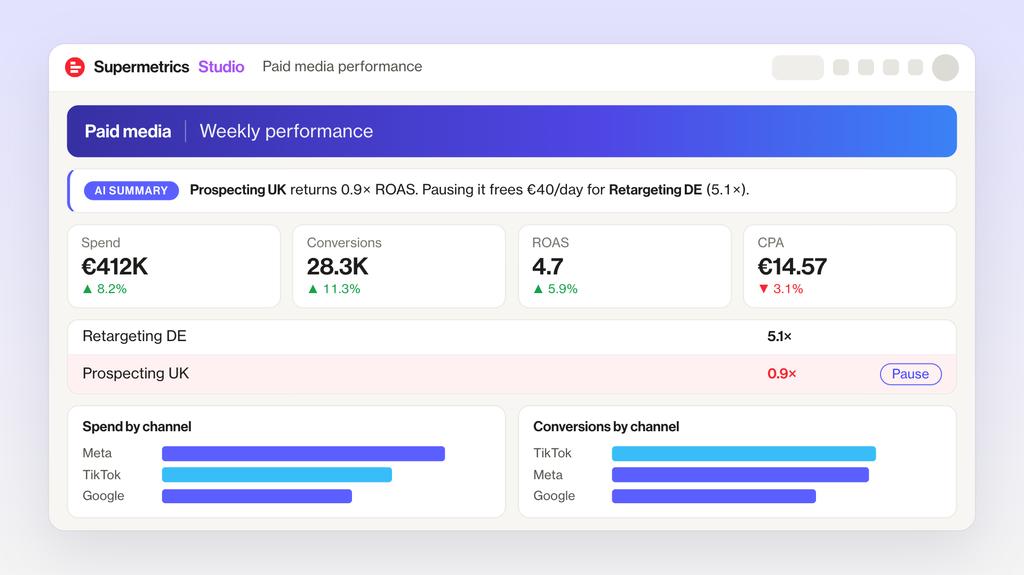
Supermetrics pulls marketing data into one core destination per plan. The list includes Google Sheets, Excel, Data Studio, Power BI and, notably, Claude, ChatGPT and Microsoft Copilot.
The standout is that AI destination option. You can ask an assistant about campaign performance and get answers grounded in your live ad data rather than a pasted CSV.
- Pricing: Starter from $49/mo ($39/mo annual), Growth from $199/mo ($159/mo annual), Pro from $499/mo ($399/mo annual). Enterprise is quote only.
- Watch out: Starter refreshes weekly and caps you at 3 sources with 3 accounts each. Warehouse destinations like BigQuery and Snowflake are Enterprise only.
- What you gain over Adverity: monthly billing from $49, a 14-day trial and the option to send data straight into Claude, ChatGPT or Copilot.
- What you give up: harmonization across sources and, below Enterprise, warehouse destinations. Each plan covers one core destination.
- Switch to it if: Adverity mostly filled Google Sheets or Data Studio reports.
7. Windsor.ai
A low-cost connector with a free plan to test on.
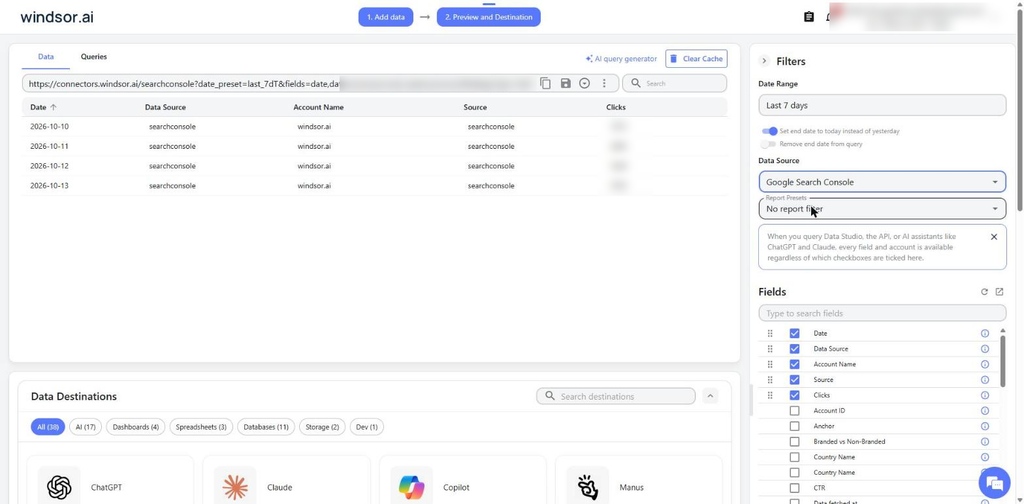
Windsor.ai moves marketing data into Sheets, Data Studio, BigQuery and other destinations, with transparent monthly tiers. It also offers MCP access, so ChatGPT, Claude, Gemini and Perplexity can query your connected data.
The standout is the entry point. A free plan covers one source and one account, which is enough to prove a connector works before you pay for anything.
- Pricing: free plan, then Basic $23/mo ($19/mo annual), Standard $118/mo ($99/mo annual), Plus $299/mo ($249/mo annual) and Professional $598/mo ($499/mo annual).
- Watch out: tiers cap sources and accounts, so price your real account count, not your platform count.
- What you gain over Adverity: a free plan to test with, paid tiers from $23/mo and MCP access for AI assistants.
- What you give up: depth. Transformation and governance are light compared with Adverity’s.
- Switch to it if: you’re a small team and cost matters more than governance.
8. Coupler.io
No-code data flows with light transformation built in.
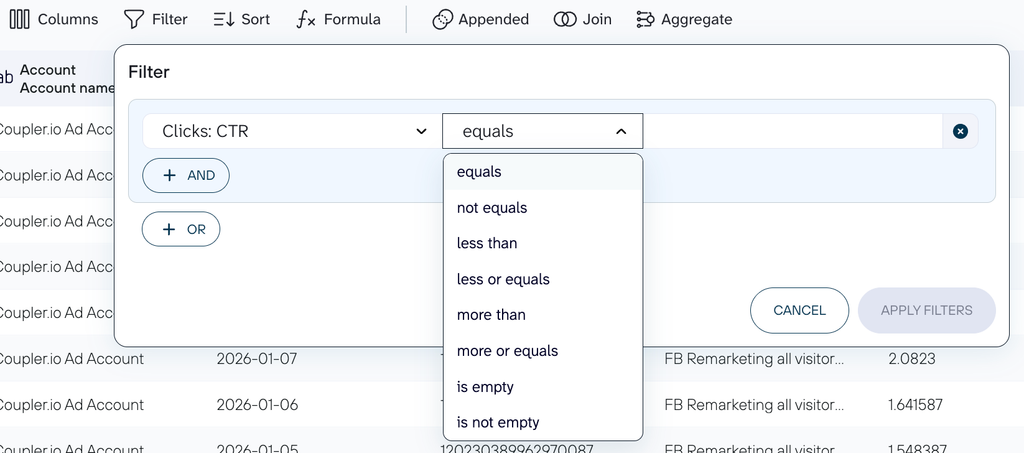
Coupler.io connects hundreds of apps to Sheets, Excel, BigQuery and BI tools, and lets you filter, join and reshape data on the way. That covers a chunk of what teams used Adverity’s transformation layer for, without writing code.
The standout is scheduled data flows that blend several sources into one clean table before it reaches your dashboard.
- Pricing: a free plan, then Starter $32/mo ($24/mo annual), Active $132/mo ($99/mo annual) and Pro $259/mo ($199/mo annual).
- Watch out: extra connected accounts cost more on top of each tier.
- What you gain over Adverity: no-code data blending, filters and reshaping before data reaches Sheets, Excel or BigQuery, with monthly billing and a free plan.
- What you give up: enterprise governance and the breadth of Adverity’s 600+ connectors.
- Switch to it if: you mainly used Adverity’s transformation layer to blend sources for dashboards.
Best Adverity Alternatives for Agency Client Reporting
Agency reporting platforms are the faucet. They connect to your clients’ platforms, turn the data into white-label reports and dashboards, schedule delivery and give clients a login. If Adverity mostly feeds client reports at your agency, client reporting software built for agencies replaces it at a fraction of the cost.
9. AgencyAnalytics
One plan, every feature, priced per client.
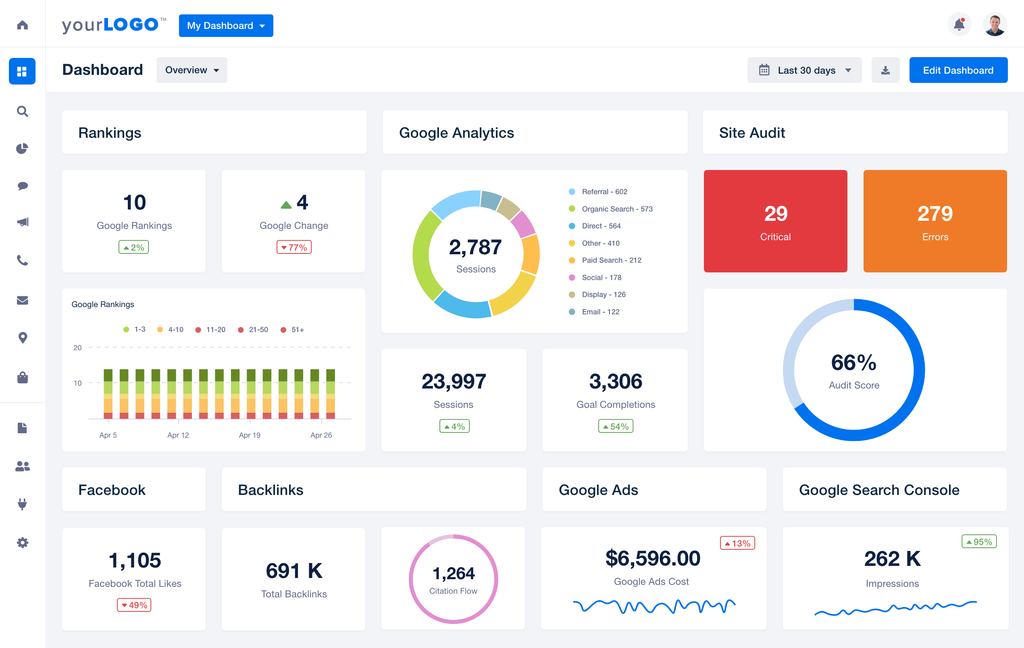
AgencyAnalytics bundles reporting, dashboards, white-label branding with custom domain and email, client logins, API access, AI insights, anomaly detection and MCP for ChatGPT and Claude into a single plan. It connects 85+ integrations.
The standout is simplicity. There’s one plan, so you never wonder which tier hides the feature you need.
- Pricing: $25 per client per month ($20 annual). Add-ons include AI Tracker at $20.83/mo per 250 credits and Rank Tracker at $41.67/mo per 500 keywords.
- Watch out: the bill grows with every client. At 40 clients you’re at $1,000/mo before add-ons, which is usually when agencies start pricing AgencyAnalytics alternatives.
- What you gain over Adverity: monthly billing, a 14-day trial instead of a sales demo, and white-label dashboards, client logins and MCP in one plan.
- What you give up: warehouse loading and cross-source data modeling.
- Switch to it if: Adverity mainly fed client reports and your roster is small enough that per-client pricing stays cheap.
10. DashThis
Clean dashboards with almost no learning curve.
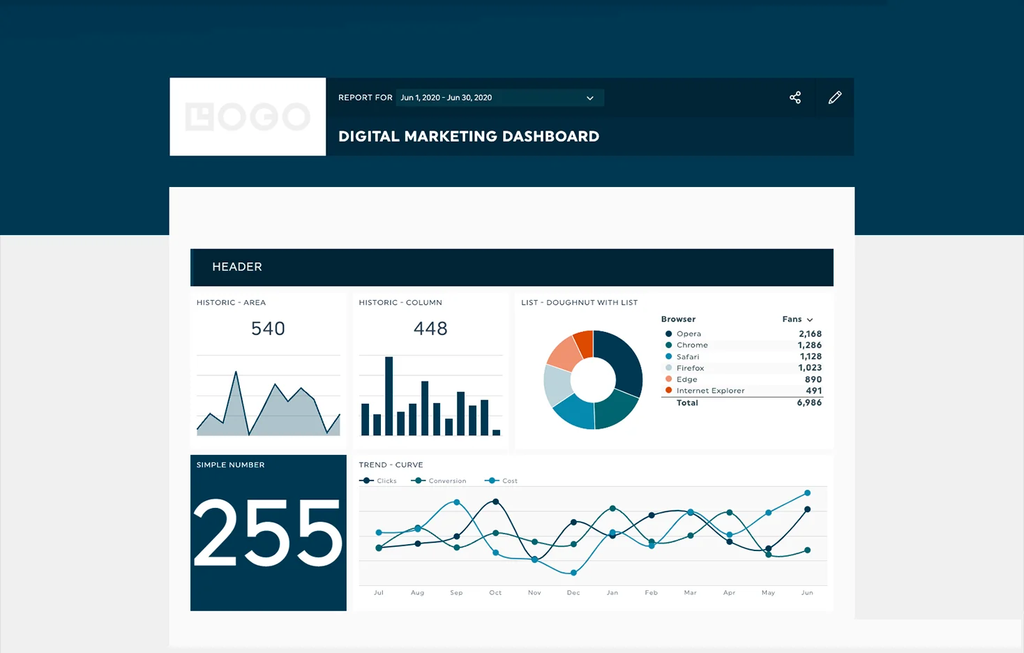
DashThis turns connected platforms into tidy, shareable dashboards fast. Users and integrations are unlimited on every plan, white-labeling comes standard, and AI Insights is included across tiers.
The standout is speed to a first dashboard. A new account manager can build one without training.
- Pricing: Individual $54/mo ($44/mo annual) for 3 dashboards and 15 sources, Professional $164/mo ($139/mo annual), Business $324/mo ($279/mo annual) and Standard $499/mo ($429/mo annual). AI Insights Pro is a paid add-on.
- Watch out: each plan caps data sources, and that cap, not the dashboard count, usually forces the upgrade. Source limits are the first thing to check against DashThis alternatives.
- What you gain over Adverity: the shortest path from connected accounts to a client-ready dashboard, with unlimited users and white-labeling on every plan.
- What you give up: warehouse destinations, published API access and room past each plan’s source cap.
- Switch to it if: you need straightforward dashboards for a small roster.
11. Swydo
Reporting plus monitoring for agencies with a long client list.
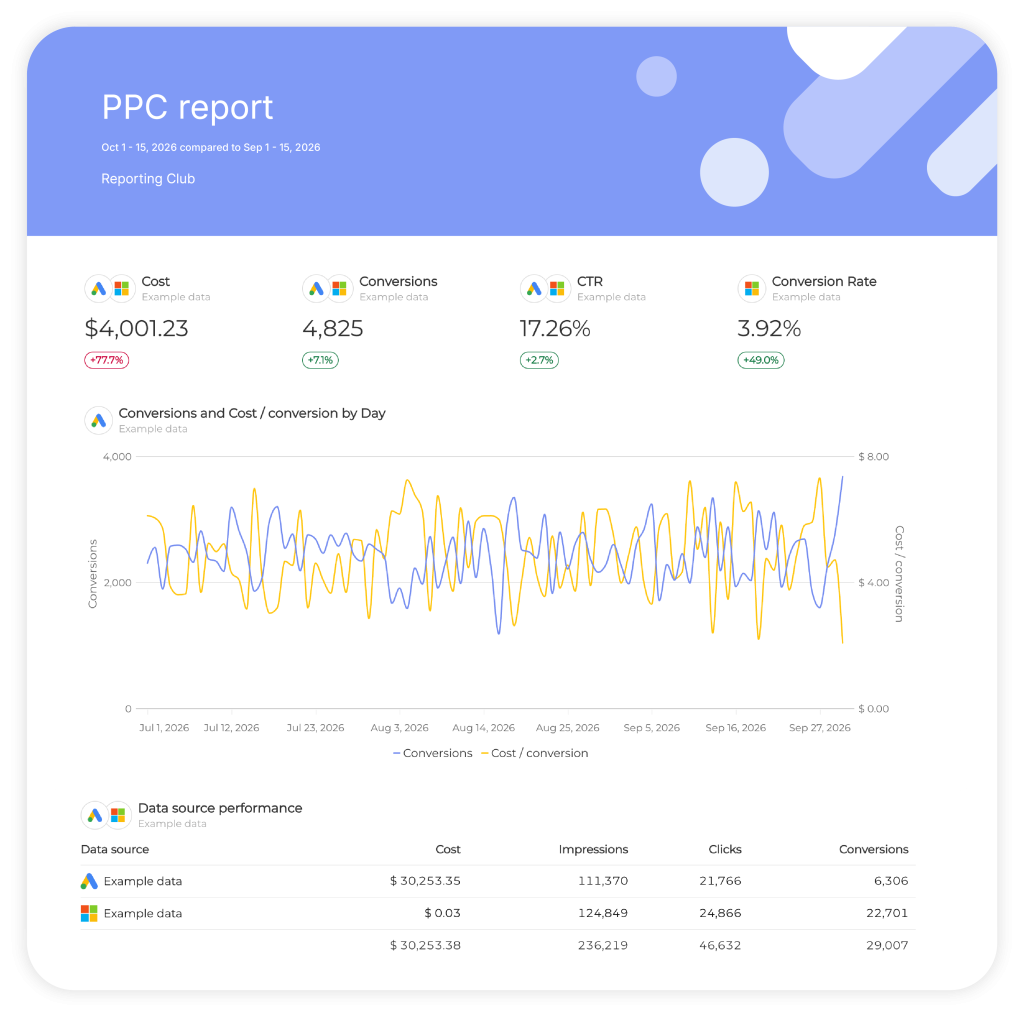
Swydo connects 40+ integrations, builds white-label reports and dashboards, and keeps watching every client’s numbers between reports. A Client Portal gives each client one secure login for their reports, boards and goals.
The standout is the monitoring layer. Metrics Overview puts up to six KPIs for every client on one screen, and Alerts flag any metric that goes out of bounds. That live data then reaches your team three ways, each following the user’s own permissions: the Swydo MCP connector for questions in Claude or ChatGPT, Slackbot answers right inside Slack, and a read-only REST API for your warehouse or BI tool.
- Pricing: $69/mo ($62/mo annual) with 10 data sources included, then $4.50 per source from 11 to 100. Clients, users and reports are unlimited.
- Watch out: every connected account counts as a data source, so 20 clients on three platforms is 60 sources, about $294/mo.
- What you gain over Adverity: monthly billing, daily alerts and goals across every client, and live data in Claude, ChatGPT and Slack.
- What you give up: a governed warehouse model. Teams that need one keep a pipeline like Fivetran and use the Swydo API to pull reporting data into it.
- Switch to it if: Adverity mainly feeds client reports and you manage 10 or more clients who need watching between reports.
12. Whatagraph
Managed integrations and cross-channel blends, billed annually.
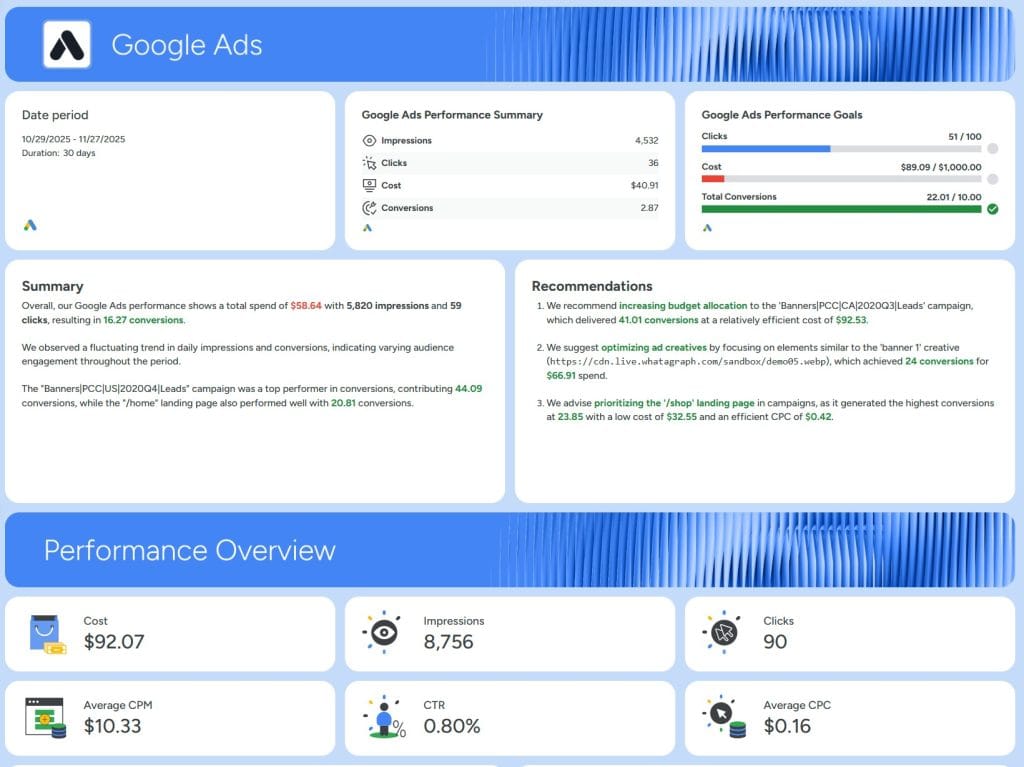
Whatagraph builds its 66 integrations in-house rather than relying on third-party connectors. The Max plan includes unlimited users and reports, data groups and blends, white-label reports, KPI overviews with alerts and the Whatagraph IQ assistant.
The standout is blending. You can merge spend and results across channels into one dataset inside the reporting tool itself.
- Pricing: Max from $812/mo, billed annually (annual only). Prime is custom and adds BigQuery and Looker transfers plus API access.
- Watch out: billing runs on source credits with a 50-credit floor, so a 20-account agency pays the same as a 50-account one.
- What you gain over Adverity: integrations Whatagraph builds and maintains itself, cross-channel blends inside the reporting tool and a published entry price.
- What you give up: monthly billing, plus warehouse transfers below Prime. If annual terms are a dealbreaker, most Whatagraph alternatives bill month to month.
- Switch to it if: you’re a larger agency that wants blended data without an ETL tool and can commit annually.
13. Databox
Goals, benchmarks and an AI analyst on every tier.
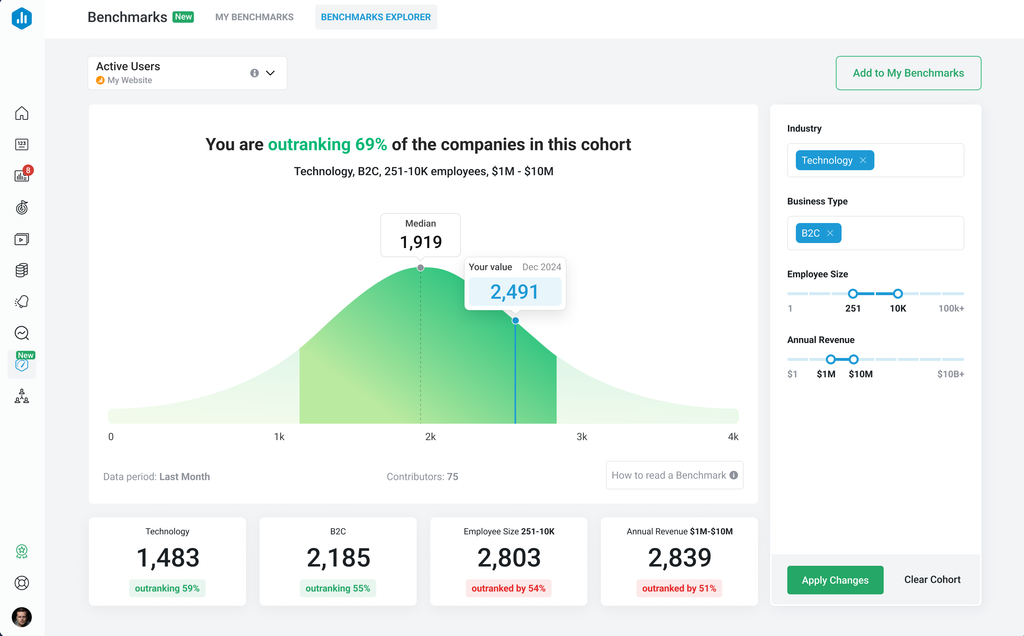
Databox connects 130+ integrations and stands out for industry benchmarking, goal tracking and its Genie AI analyst. It runs a dedicated agency track alongside its in-house plans.
The standout is benchmarks. You can show a client how their numbers stack up against similar companies, not just against last month.
- Pricing: Agency Starter $99/mo ($79/mo annual) for 5 clients, Agency Pro $199/mo ($159/mo annual), Agency Growth $499/mo ($399/mo annual) and Agency Premium $999/mo ($799/mo annual). Extra sources cost $2.40/mo each.
- Watch out: white-labeling is included only on Agency Premium. Below that it’s a $250/mo add-on ($200 annual), so add it in before you compare it with Databox alternatives.
- What you gain over Adverity: monthly billing, a free plan, and benchmarks and goal tracking that show clients how they compare with peers.
- What you give up: warehouse destinations, and room past 3 included sources on most plans.
- Switch to it if: your client conversations center on goals and benchmarks.
How Adverity Alternatives Charge and Where Bills Surprise You
The pricing unit matters more than the headline price. Two tools that both start near $70 a month can land hundreds of dollars apart once you add your real client count, because one charges per client, another per connected account and a third per million rows.
| Pricing unit | Tools | What makes the bill jump |
|---|---|---|
| Quote, annual (sources, rows, destinations) | Adverity Connect, Improvado, Boomi | Row volume, extra destinations, scope you can’t cut mid-term |
| Flexpoints | Funnel | More connectors, accounts or destinations |
| Monthly active rows | Fivetran | Backfills, restated conversions, deletes, $5 minimum per connection |
| Plan caps per destination | Supermetrics | Extra destinations, faster refresh tiers |
| Per connected account | Swydo, Windsor.ai, Coupler.io | Adding ad accounts and properties |
| Per client | AgencyAnalytics | Every new client |
| Source caps per plan | DashThis | Crossing a plan’s source limit |
| Source credits with a floor | Whatagraph | A 50-credit minimum, whatever you connect |
What does that look like for a real agency? The chart below models 10 and 20 clients on three platforms each, at monthly rates unless a tool only bills annually. Per-client pricing looks cheap at five clients and expensive at 40, while per-source pricing stays closer to flat per client.
What agency reporting tools cost as your client list grows
Each client connects three platforms (for example Google Ads, Meta Ads and GA4). Monthly billing unless marked.
Swydo: $69 with 10 sources included, then $4.50 per source. DashThis: Professional at 10 clients, Business at 20 (forced by the source cap). Databox: Agency Pro plus $2.40 per extra source, white-labeling adds $250/mo. AgencyAnalytics: $25 per client. Whatagraph: Max, annual only, 50-credit floor. Yellow bars are billed annually.
How Does Adverity Compare to Funnel, Supermetrics and Fivetran?
Funnel is the closest swap, Supermetrics is the cheapest pipe and Fivetran is the strongest pure pipeline. Adverity sits above all three on price and contract weight. The table lines them up on the factors buyers ask about most, and the short comparisons under it cover when each one wins.
| Factor | Adverity | Funnel | Supermetrics | Fivetran |
|---|---|---|---|---|
| Entry price | Quote only (Connect) | From $300/mo, annual only | $49/mo ($39 annual) | Free up to 500K MAR |
| Monthly billing | No | No | Yes | Yes, usage-based |
| Free trial | No (Connect) | Arranged through sales | 14 days | Free plan |
| Main pricing unit | Sources, rows, destinations | Flexpoints | Destination and plan caps | Monthly active rows |
| Warehouse destinations | Yes | Yes | Enterprise only | Yes, the core job |
| Built-in transformation | Yes | Yes | Light | Yes, through dbt |
| Best for | Enterprise brands and agency groups | Teams wanting published price floors | Spreadsheet and Data Studio users | Data teams with a warehouse |
Adverity vs Funnel
Pick Funnel if you want Adverity’s depth with published entry prices, agency workspaces and easier setup. Pick Adverity if you need its governance features or the Atlas AI layer on your warehouse.
Adverity vs Supermetrics
Pick Supermetrics if your data ends up in Sheets, Data Studio or an AI assistant and you’d rather pay monthly. Pick Adverity if you need harmonized data in a warehouse across dozens of sources.
Adverity vs Fivetran
Pick Fivetran if a data team already models data in a warehouse and wants low-maintenance ingestion. Pick Adverity if marketers, not engineers, need to manage mappings and transformations themselves.
Adverity vs Swydo
These two solve different jobs. Pick Swydo if the end product is client reports, dashboards and performance alerts across many accounts, plus an API that hands that live data to your other tools. Pick Adverity if the end product is a governed marketing dataset that several teams and tools consume.
Do You Need a Data Warehouse at All?
You need a warehouse only when someone will model the data and more than one tool needs the same cleaned dataset. If your data’s only job is to become client reports, a warehouse adds cost and a maintenance burden without making the reports any better.
The argument for warehouses usually leans on data quality, and the stakes are real. Gartner estimates that poor data quality costs organizations at least $12.9 million a year on average. But a warehouse doesn’t fix quality on its own. Consistent naming, connection monitoring and someone who owns the definitions do.
You probably need a warehouse if:
- Finance, BI and marketing all pull from the same marketing data
- You blend ad spend with CRM revenue or offline sales at row level
- A data engineer or analyst will maintain models every week
You probably don’t if:
- Your output is client reports and dashboards
- Nobody on the team writes SQL
- Your sources are mostly ad platforms, analytics, SEO and social
How to Switch From Adverity Without Losing Data
The safe switch takes one full reporting cycle and starts with your contract, not your connectors. Follow these steps in order and you’ll keep your history intact and avoid paying for two tools longer than you need to.
- Find your renewal date and notice period. Check your order form for the cancellation window, whether fees can rise at renewal and whether you can reduce sources mid-term. Start the switch at least six months before renewal.
- Inventory every datastream. List each source, account, transformation and destination, plus who uses the output. You’ll usually find streams nobody has opened in months.
- Export your history before access ends. Platform APIs limit how far back any new tool can re-pull data, so save historical tables to your warehouse or files first.
- Map metric names and custom calculations. Write down currency conversions, naming conventions and custom formulas so the new tool reproduces the same numbers.
- Rebuild your two or three most important reports and run them in parallel. Compare totals line by line for one full cycle. Some reporting platforms, Swydo included, offer free migration help for this step.
- Cut over by client tier. Move smaller accounts first, then your largest clients once the numbers match.
- Revoke old access. Remove Adverity’s tokens from every ad and analytics account and close the datastreams.
Mistakes That Make an Adverity Switch Expensive
Most bad switches come from comparing the wrong numbers. The tool is rarely the problem.
- Comparing annual prices with monthly ones. A $39 annual rate and a $49 monthly rate are the same plan. Line up like with like.
- Buying plumbing with no plumber. A warehouse pipeline with nobody to model the data just moves your problem somewhere more expensive.
- Forgetting add-ons. Funnel’s measurement add-on, Databox’s white-label fee, Fivetran’s per-connection minimum and Supermetrics’ extra destinations all sit outside the headline price.
- Pricing platforms instead of accounts. Twenty clients on Google Ads is 20 data sources, not one. Count accounts.
- Skipping the parallel run. Small differences in attribution windows or currency settings only show up when you compare side by side.
- Ignoring broken connections. Expired tokens silently empty reports. Choose a tool that warns you before a client notices.
Which of these would hit your agency hardest? For most teams it’s the add-ons, because they only appear after the contract is signed.
What to Check in AI and MCP Features
Nearly every Adverity alternative now advertises AI or an MCP server, which lets assistants like Claude and ChatGPT query your data directly. The useful differences are scope, permissions and cost, not whether the feature exists.
AI only works on data you can trust. Gartner predicts that through 2026, organizations will abandon 60% of AI projects unsupported by AI-ready data. Clean, consistently named data matters more than the assistant on top of it.
Ask these four questions before you count AI as a reason to switch:
- Read-only or write access? Read-only is safer for client data. Write access needs approvals.
- Does it follow user permissions? An account manager shouldn’t be able to query clients they don’t manage.
- One client or the whole portfolio? Portfolio-wide questions (“which clients missed their CPA target this month?”) are where agencies save the most time.
- Included or metered? Some tools draw down AI credits per question, others include MCP at no extra cost, and Adverity has you bring your own model.
Final Thoughts
Don’t replace Adverity with a smaller Adverity unless you need the plumbing. Funnel, Improvado, Fivetran and Airbyte make sense when a data team will use a warehouse. If client reports are the real job, report automation tools built for agencies get you there faster, with monthly billing and costs that track your client list.
Whatever you pick, start with your renewal date and run one parallel cycle before you cut over.
Adverity Alternatives FAQ
Direct answers on cost, fit and switching before your next renewal
Adverity is a marketing data platform. Teams use it to pull data from 600+ marketing and sales sources, clean and harmonize it, then send it to a data warehouse, BI tool or AI assistant.
Its customers are mostly enterprise brands and large agency groups, such as Unilever, American Express and Dentsu, that need one consistent version of their marketing numbers across many markets and teams.
Adverity Connect is quote-only and billed annually, priced on data sources, rows per month and destinations. Buyer data from Vendr puts the median annual contract at around $53,650. Adverity Atlas Standard lists at $15,417 per month on an annual plan.
| Connect plan | Data sources | Destinations | Rows per month |
|---|---|---|---|
| Core | 10 | 1 | 25M |
| Standard | 25 | 2 | 60M |
| Professional | 40 | 4 | 100M |
Rows are the dial most teams underestimate. A busy Meta account broken down daily by ad, placement and country fills a monthly row allowance quickly.
No. Adverity Connect doesn’t offer a free trial, so you judge fit from a sales demo. Adverity Atlas has a free Discovery phase that rolls into a paid plan.
If testing first matters, Supermetrics, Swydo, AgencyAnalytics and DashThis offer 14-day trials, while Windsor.ai, Coupler.io, Databox and Fivetran have free plans. Connect one real client and check the totals against Adverity.
Adverity Connect moves and cleans marketing data. Adverity Atlas is an AI layer that sits on a data warehouse and gives AI agents consistent definitions of your metrics, so their answers match your reporting.
Atlas doesn’t require Connect. It works with data any pipeline has loaded into Snowflake, BigQuery, Databricks or Redshift.
Adverity is worth it for enterprise teams that need governed data from dozens of sources in a warehouse and have a data team to run it. For agencies that mainly need client reports, it is usually more platform, contract and setup than the job requires.
G2 buyers report about two months to implement and 13 months to see a return, so the payoff comes over a long horizon.
The best Adverity alternative depends on the job you need done. Funnel is the closest like-for-like swap, Fivetran and Airbyte suit data teams with a warehouse, Supermetrics fits spreadsheet and Data Studio users, and Swydo, AgencyAnalytics and DashThis fit agencies whose output is client reports.
| The job you need done | Start with |
|---|---|
| Governed marketing data in a warehouse | Funnel, Improvado |
| Raw data for an in-house data team | Fivetran, Airbyte |
| Data in Sheets, Data Studio or an AI assistant | Supermetrics, Windsor.ai, Coupler.io |
| Client reports and monitoring | Swydo, AgencyAnalytics, DashThis |
For agencies whose main output is client reporting, a reporting platform beats a data pipeline. Swydo fits agencies managing many clients, with per-source pricing, daily alerts and live data in Claude, ChatGPT and Slack. AgencyAnalytics fits a smaller roster on one per-client price, and Funnel’s agency plans fit groups that also need warehouse destinations.
The deciding number is cost per client as you grow. At 20 clients on three platforms each, Swydo comes to about $294/mo, DashThis to $324/mo, AgencyAnalytics to $500/mo and Whatagraph to $812/mo billed annually.
Windsor.ai and Coupler.io have free plans, with paid tiers from $23/mo and $32/mo. Airbyte is free to self-host if you have engineers. For agency client reporting, Swydo starts at $69/mo ($62/mo annual) with 10 data sources included.
Cheapest at sign-up isn’t always cheapest at scale. Price each tool on the unit you actually grow by, whether that’s clients, connected accounts, rows or destinations.
Yes. Airbyte is open source and free to self-host, with a managed cloud version on usage-based pricing.
You trade license fees for engineering time. Hosting, upgrades and patching connectors when a platform API changes all land on your team.
Adverity’s closest competitors are Funnel, Improvado and Supermetrics Enterprise for marketing data, Fivetran and Airbyte for warehouse pipelines, and Salesforce Marketing Cloud Intelligence (formerly Datorama) for enterprise marketing analytics. Agency reporting platforms like Swydo and AgencyAnalytics compete when the goal is client reporting.
Funnel is the better pick if you want a published starting price, an easier setup and agency workspaces. Adverity is the better pick if you need its governance features or the Atlas AI layer. G2 reviewers rate Funnel higher for ease of setup (8.6 vs 7.6) and ease of admin (8.9 vs 8.0).
Both bill annually. Funnel’s plans start from $300/mo billed annually, and usage is metered in flexpoints whose cost isn’t published, so treat that as a floor.
Yes, if your data ends up in Google Sheets, Data Studio or an AI assistant. Supermetrics starts at $49/mo ($39/mo annual) with a 14-day trial. It’s a weaker fit if you need harmonized data across many sources in a warehouse, because warehouse destinations are Enterprise only.
Use Fivetran if a data team already runs a warehouse and only needs reliable ingestion. It’s free up to 500K monthly active rows, then bills on usage with a $5 monthly minimum per connection. Keep a marketing data platform if marketers, not engineers, manage the mappings.
Watch backfills and ad platforms that restate conversions. Every re-synced row counts toward monthly active rows.
Only for visualization. Data Studio, the free Google tool formerly called Looker Studio, builds dashboards but doesn’t clean, store or harmonize data, and non-Google sources need paid partner connectors. Pair it with a connector, or use a reporting platform that handles both.
Yes. Datorama is now Salesforce Marketing Cloud Intelligence, and Salesforce says it has no end-of-life plans for it. Salesforce also sells a separate Marketing Intelligence product, so confirm which one a quote covers.
Boomi acquired Rivery in December 2024 and renamed it Boomi Data Integration. Comparisons that still list Rivery plans and prices are out of date, so get a current Boomi quote.
Only if someone on your team will model the data and more than one tool needs the same cleaned dataset. If the data’s only job is to become client reports, a reporting platform connects straight to your ad and analytics accounts with no warehouse in between.
You probably need one if finance and BI pull from the same marketing data, you blend ad spend with CRM revenue at row level, or an analyst maintains data models every week.
Most of them, usually through MCP. Funnel, Supermetrics, Windsor.ai, AgencyAnalytics, Whatagraph and Swydo all connect marketing data to AI assistants.
Check four things before AI sways your decision: whether access is read-only, whether it follows each user’s permissions, whether it covers one client or your whole portfolio, and whether each question draws down paid AI credits.
Yes. Adverity Connect includes an API and an MCP server, and Adverity doesn’t meter or mark up AI model usage because you bring your own model.
At least the ones your clients already expect from Adverity. Adverity holds SOC 2 Type 2 and ISO/IEC 27001 and covers GDPR, CCPA, DORA and HIPAA, so ask any replacement for its SOC 2 report, data residency options, SSO and role-based permissions before you sign.
Plan for about four to eight weeks, covering setup plus one full reporting cycle with the old and new tools running side by side.
Move smaller clients first and your largest accounts last, once the totals match line by line.
At least six months before your renewal date. Check your order form for the cancellation notice period and whether fees can rise at renewal, because missing the notice window can lock you into another year.
Export your historical tables to a warehouse or files before your Adverity access ends. Platform APIs limit how far back any new tool can re-pull data, so older history may not be recoverable later.
Write down metric names, currency conversions and custom formulas from your datastreams too, so the new tool reproduces the numbers your clients are used to.
Usually each connected account, not each platform. Twenty clients on Google Ads is 20 data sources on per-source tools like Swydo, while AgencyAnalytics charges per client and Fivetran charges by monthly active rows.
Count your real accounts before you compare quotes. It’s the most common reason a cheap-looking plan ends up expensive.
The costliest mistakes are comparing annual prices with monthly ones, counting platforms instead of connected accounts and skipping a parallel run before cutting over.
Price in the add-ons outside the headline as well, such as Funnel’s measurement add-on, Databox’s white-label fee, Fivetran’s per-connection minimum and Supermetrics’ extra destinations.
Get client reporting and daily monitoring without an enterprise contract. Start with 10 data sources included and monthly billing.
Start Your Free Trial Today